Artist Research – Barlow, Delaunay and Hesse

Phyllida Barlow’s Drawings

While Barlow is best known for her sculptural work, her majority of these have been destroyed. This leaves behind her drawing archive as the only surviving record of her earlier sculptural practice. Her drawings show influences from Arte Povera, Pop Art and New British Sculpture amongst others.

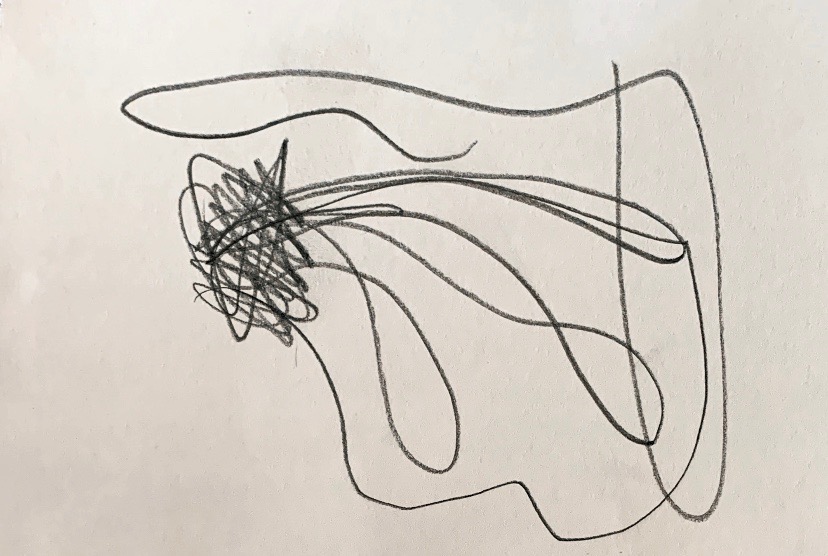
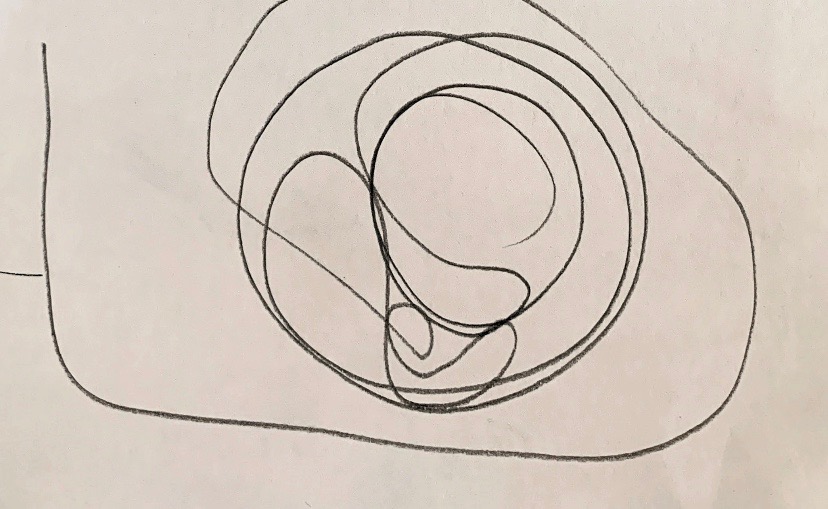
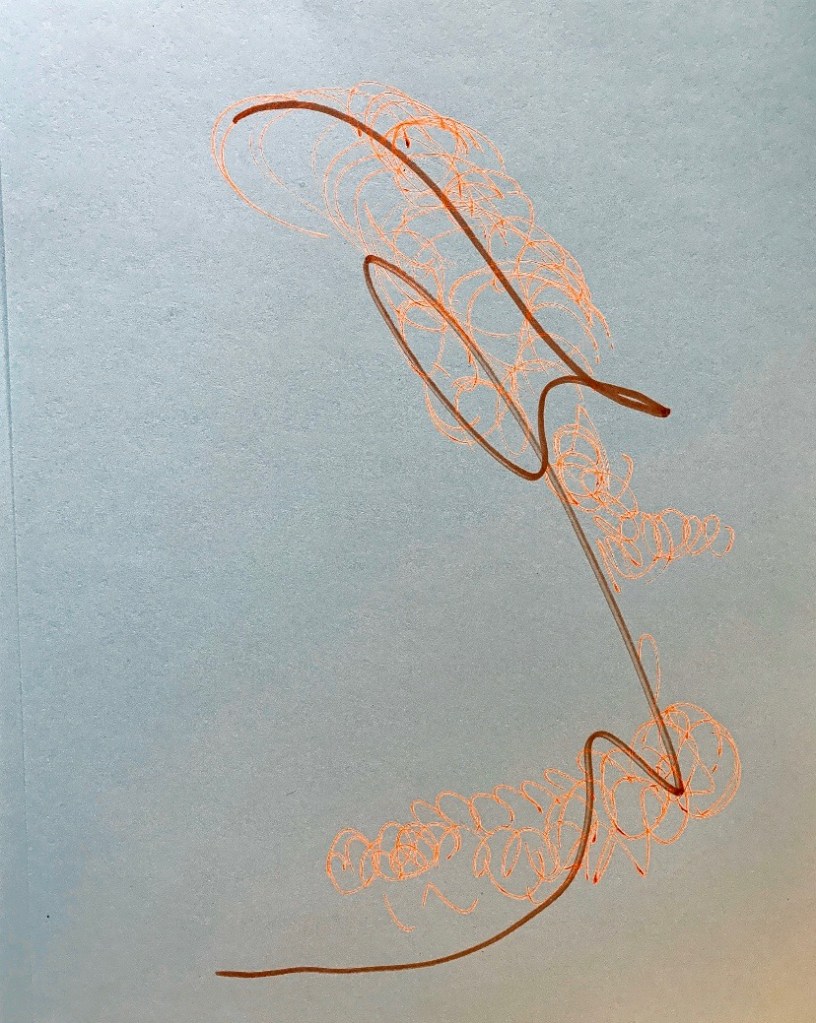
Its easy to see and draw a connection between her primary working drawings and her resolved sculpture work. she draws all throughout her creative process, both to aid developing work and to visualise ideas which are later translated into three dimensions. The drawings are fluid and create a real feeling of space like stepping into another hazy colourful dimension. Primarily using pencil, pastel and charcoal using cross-hatching, scribbling or covering expanses of paper in washes of flat colour, her mark-making appears deliberate but at the same time free flowing and spontaneous.

Her bold use of vibrant colour as a means of expression is the thing I find the most interesting as I think colour is a big part of my own practice. Looking at her work and moving forward with this drawing project I want to carefully start including colour in the form of pencils and pastels. I want to create drawings that feel like a small vibrant space that could be visited while still being abstract enough that it can be interpreted in different ways.

Sonia Delaunay’s Drwaing’s

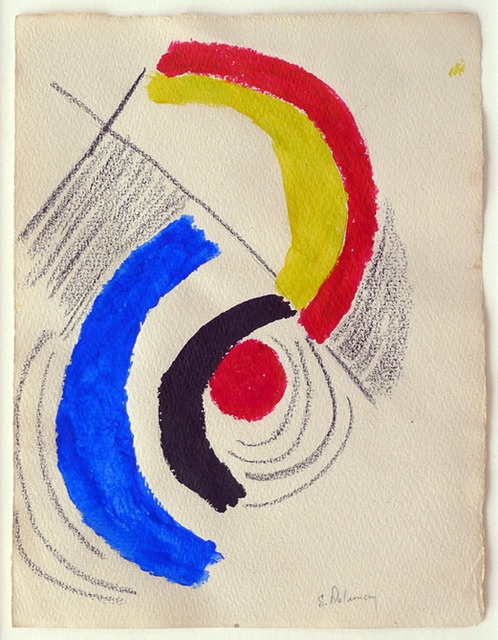
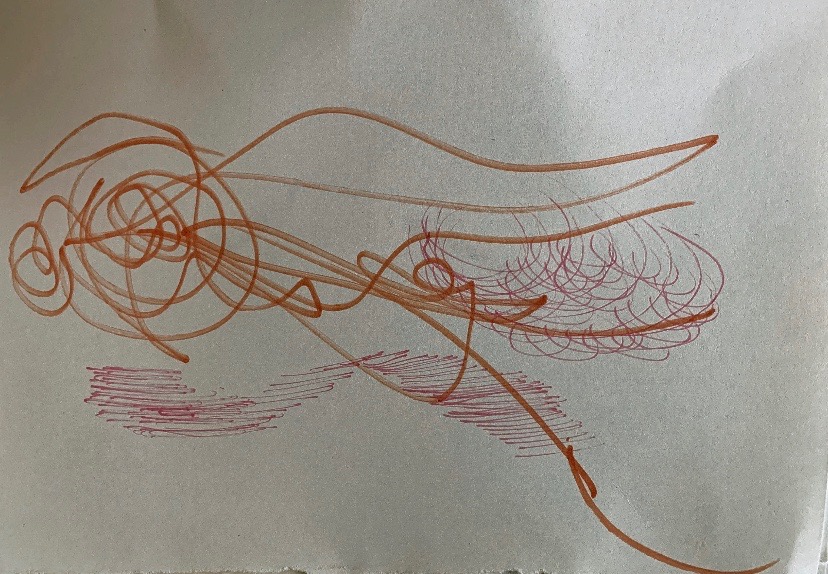
Delaunay’s work pioneered the movement simultanism. This movement revolved around the idea of colours looking different depending on the colours at surrounded them. In her own words “Colour is the skin of the world.” “One who knows how to appreciate colour relationships, the influence of one colour on another, their contrasts and dissonances, is promised an infinitely diverse imagery.”

She was a multi-disciplinary abstract artist and key figure in the Parisian avant-garde alongside her husband, Robert Delaunay. While she is now known for her large abstract and wildly colourful painting i am most drawn to her smaller drawings and colour studies. These show such movement and again appear almost otherworldly. While the colours are mostly contrasting when arranged and placed in her thoughtful swirling compositions it feels totally harmonised. The contrast of the chaos and the calm i find the most interesting.

I think I am most drawn to her work as I also consider colour to now be a large part of my practice. After coming out of lockdown and everything that was going on I feel like I want to explore and incorporate it more in my work as I really feel like iv been lacking it. As well as this I have been living with someone who is colour blind and having them as an impact on my everyday life, having them see things completely different to me i think has inspired me to consider it more.

Eva Hesse

Hesse was a German-born American sculptor known for her pioneering work in materials such as latex, fiberglass, and plastics. Like Barlow she is most known for her sculptural work and use of materials in this field however i find her working drawings and sketches most interesting. She strongly establishes the type, feel and shape of the material in the drawings despite only using drawing materials with no text to label what is what. Also its easy to see how the materials will react and communicate with each other just how they overlap on the page.
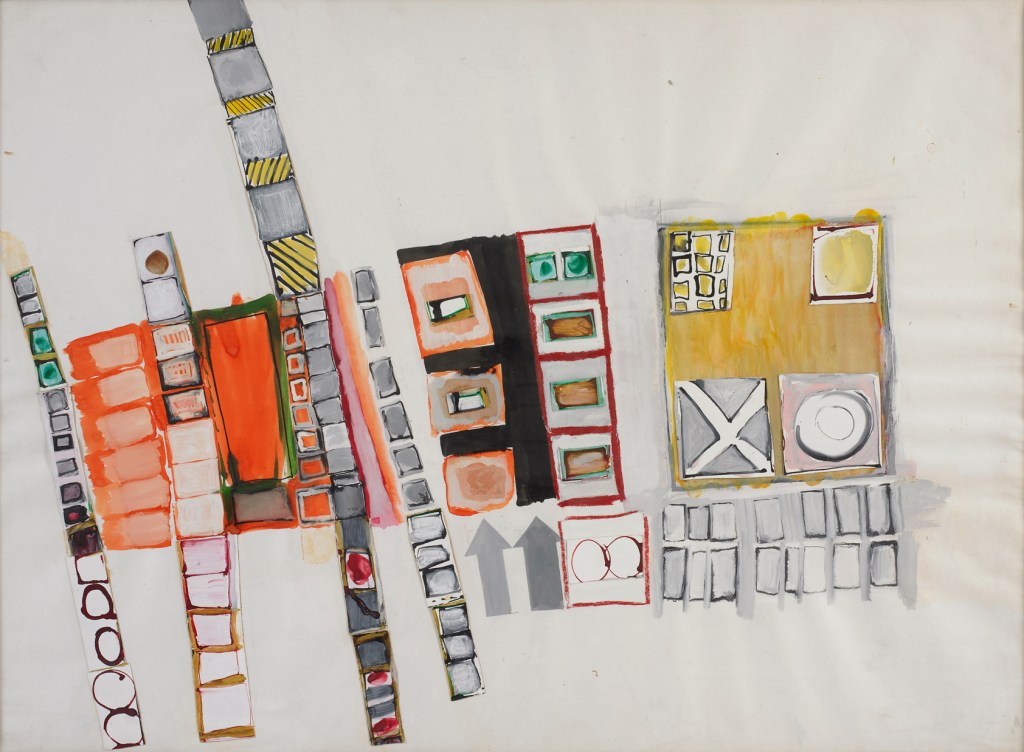
The abstract forms suggest figures and objects interacting and almost becoming one with each other. They speak of positive stories and spaces, something transports you into a new and imaginative space.
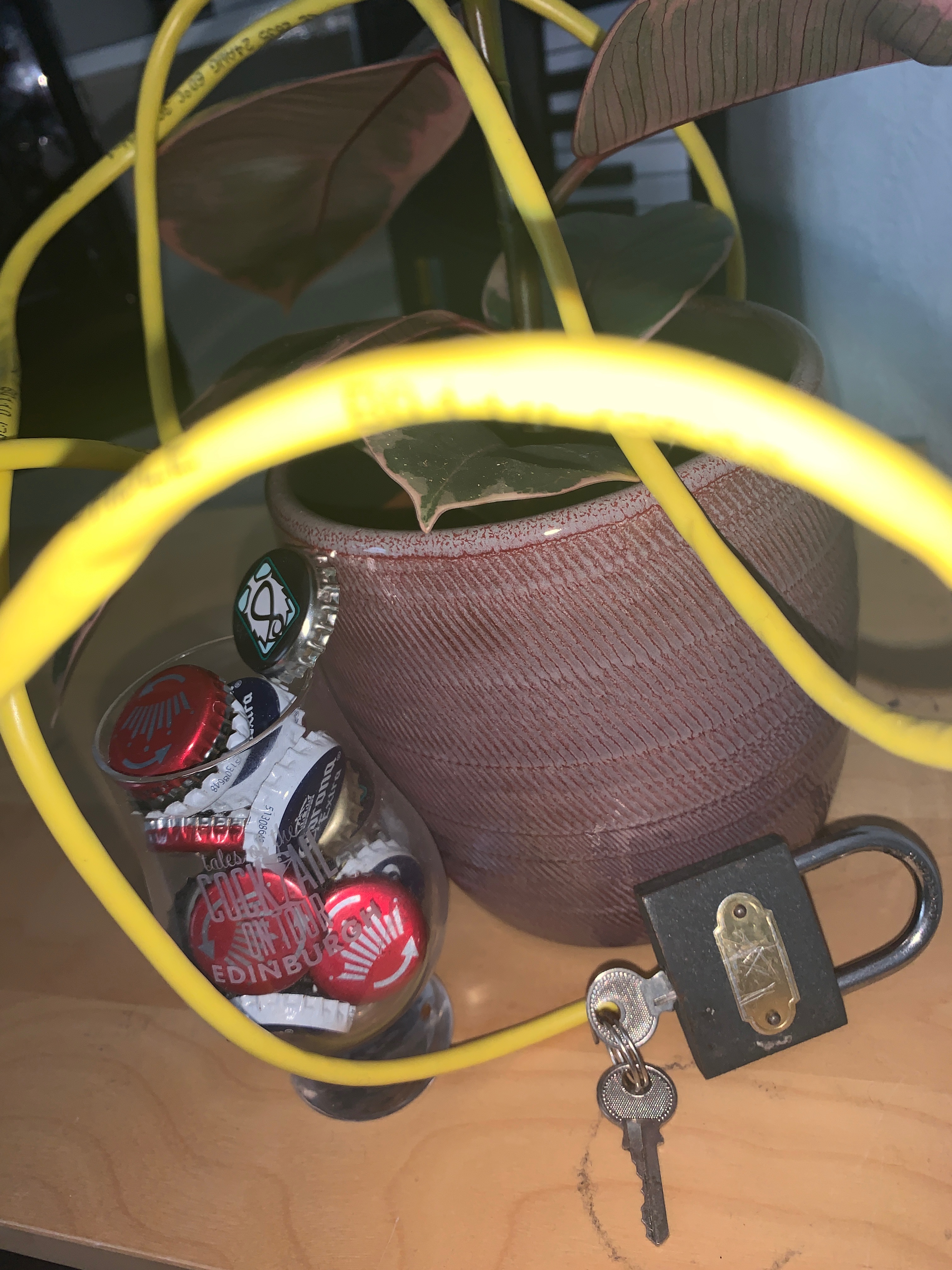
Developmental Drawings WEEK 1

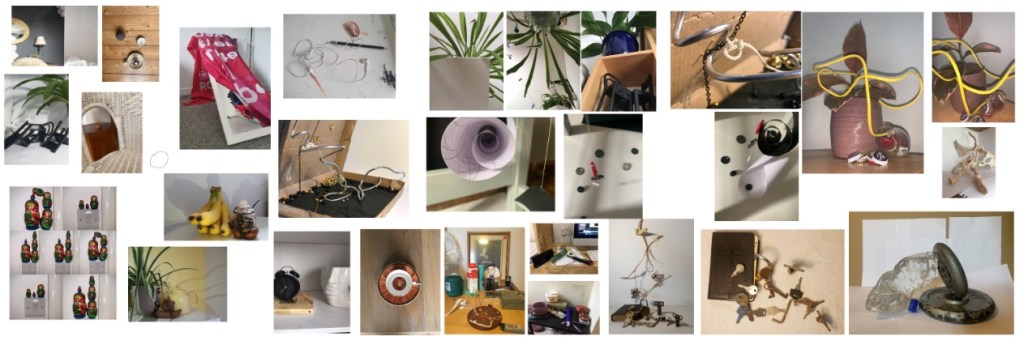
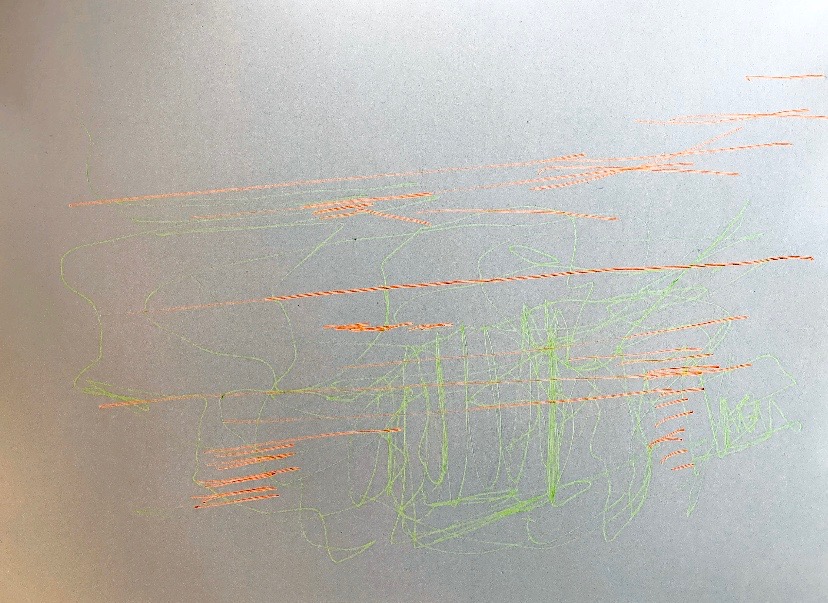
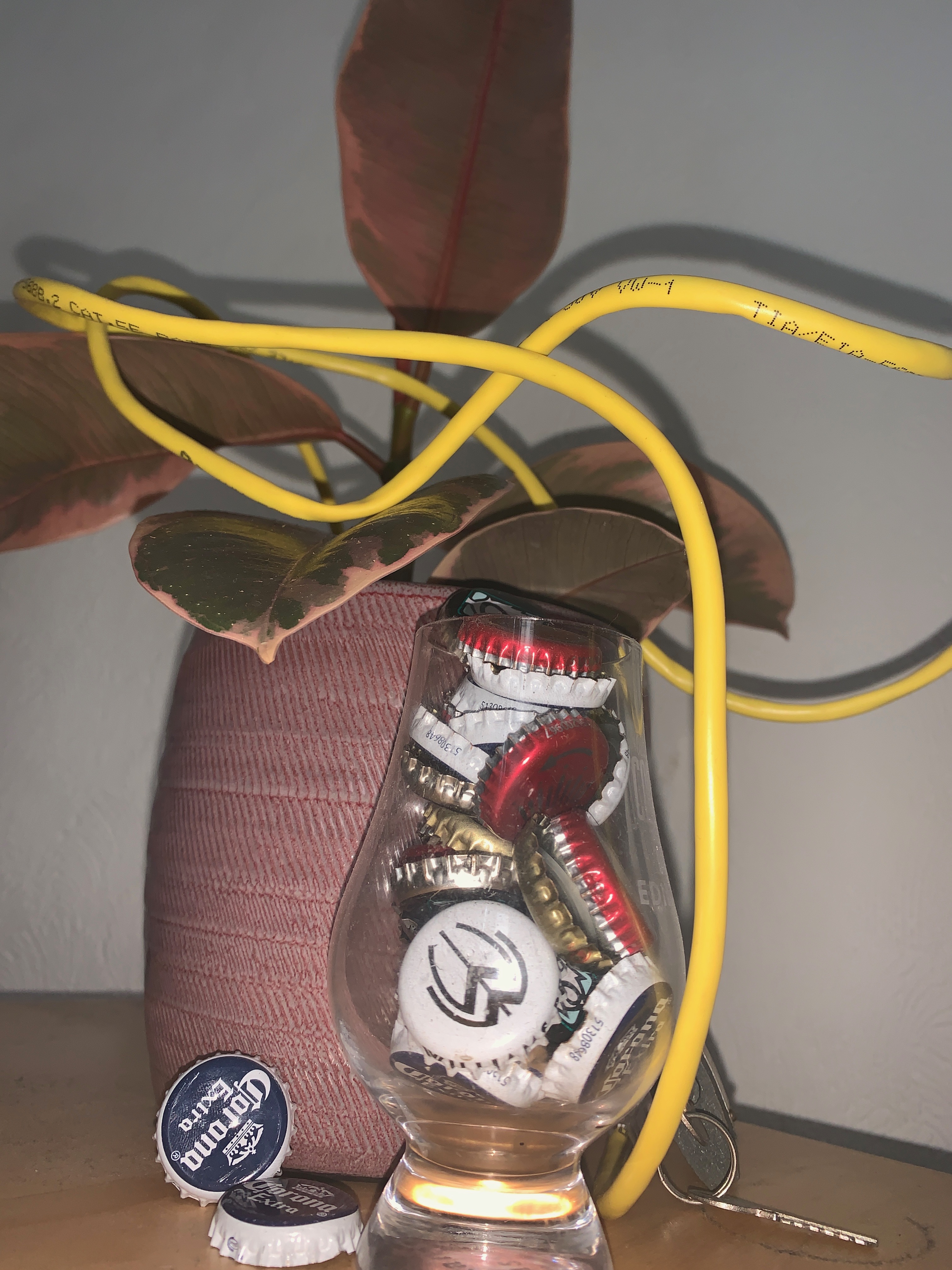
Starting last week with making my small installation I loosely considered composition, line and shapes when putting it together however didn’t want to overthink it to much. Then after taking some sketches of my own installation I quickly wanted to start looking at others installations and focus on which ones drew my attention and why.

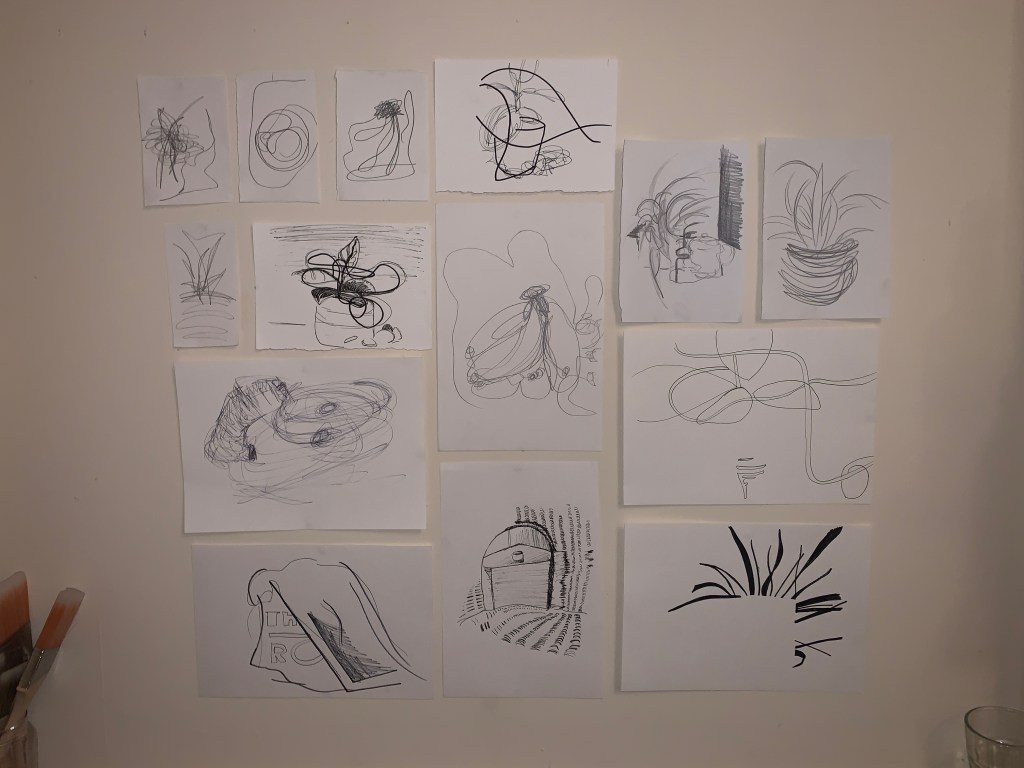
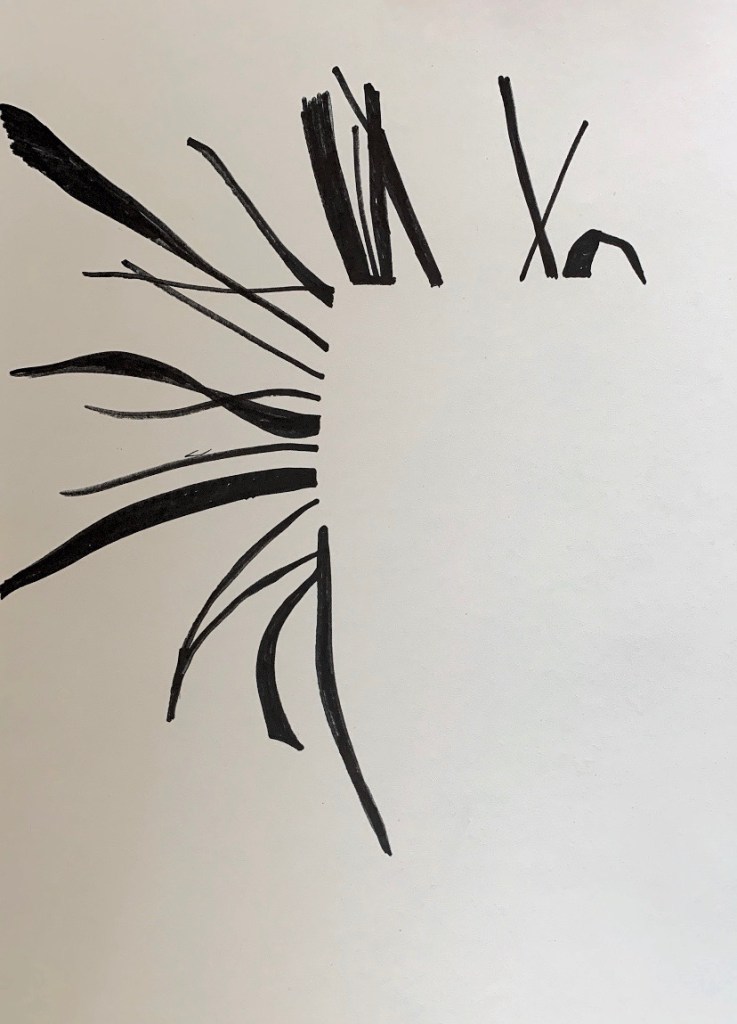
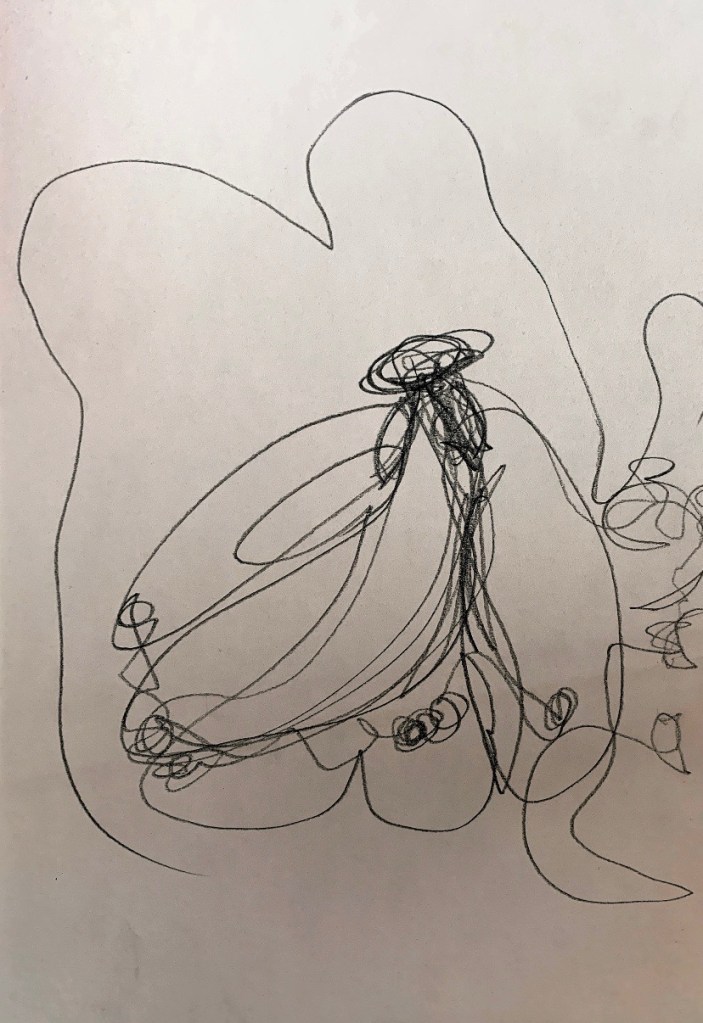
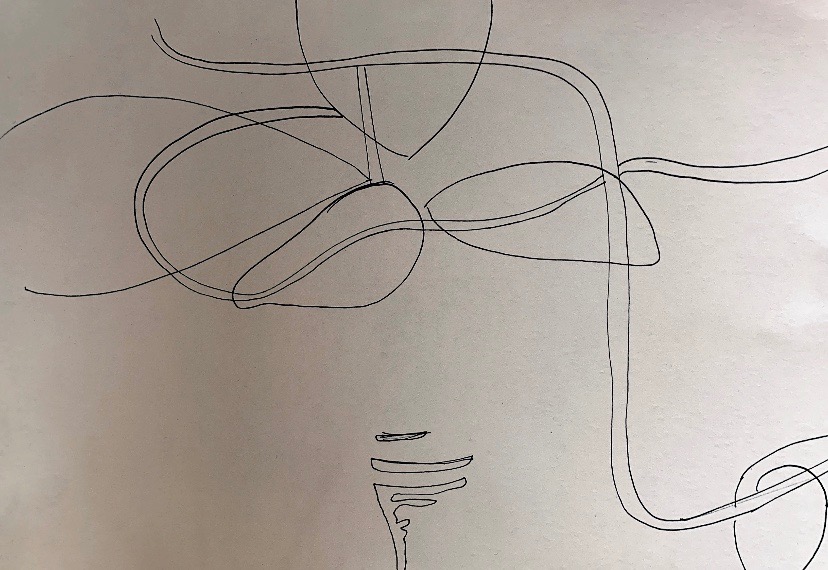
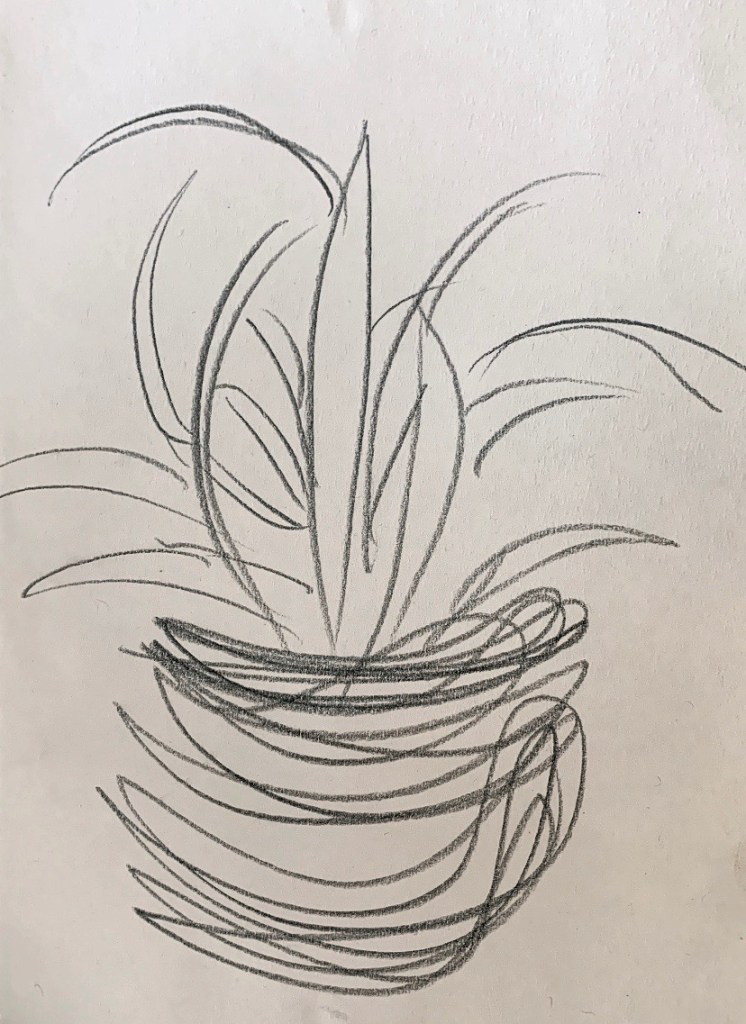
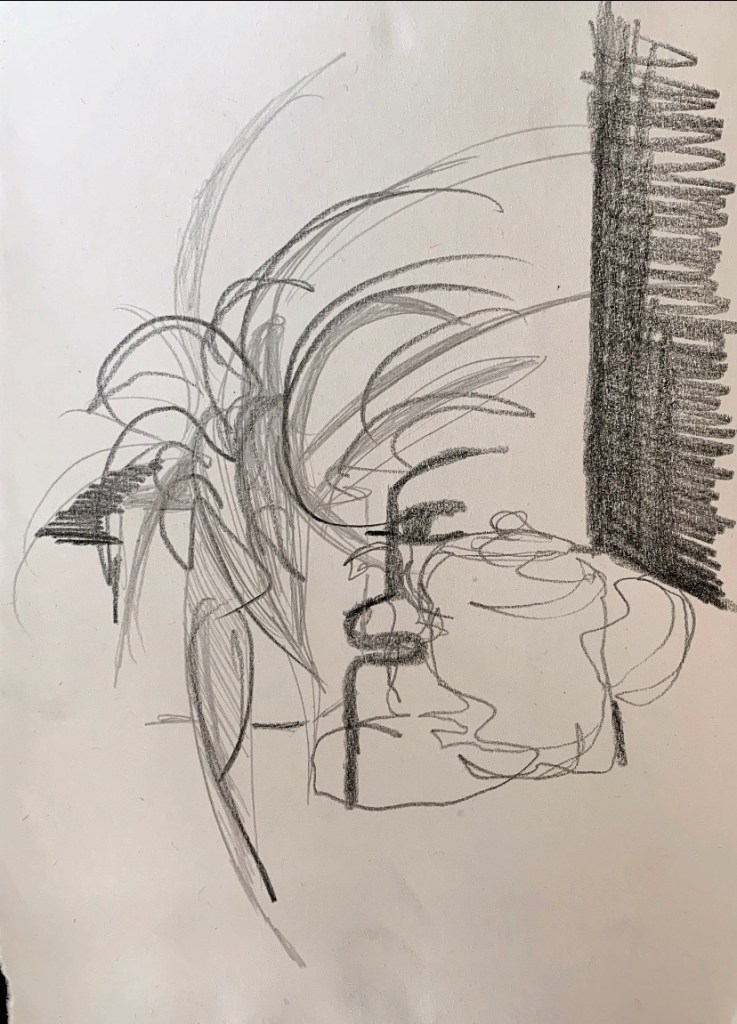
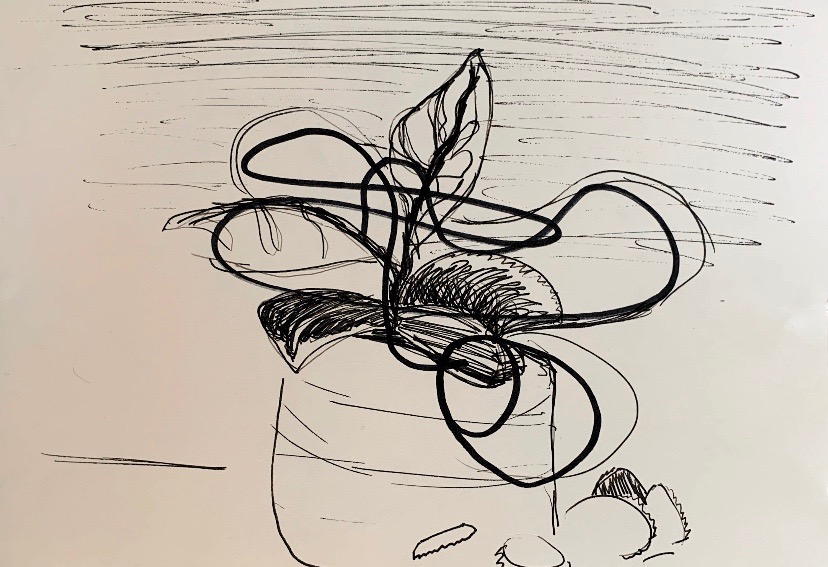
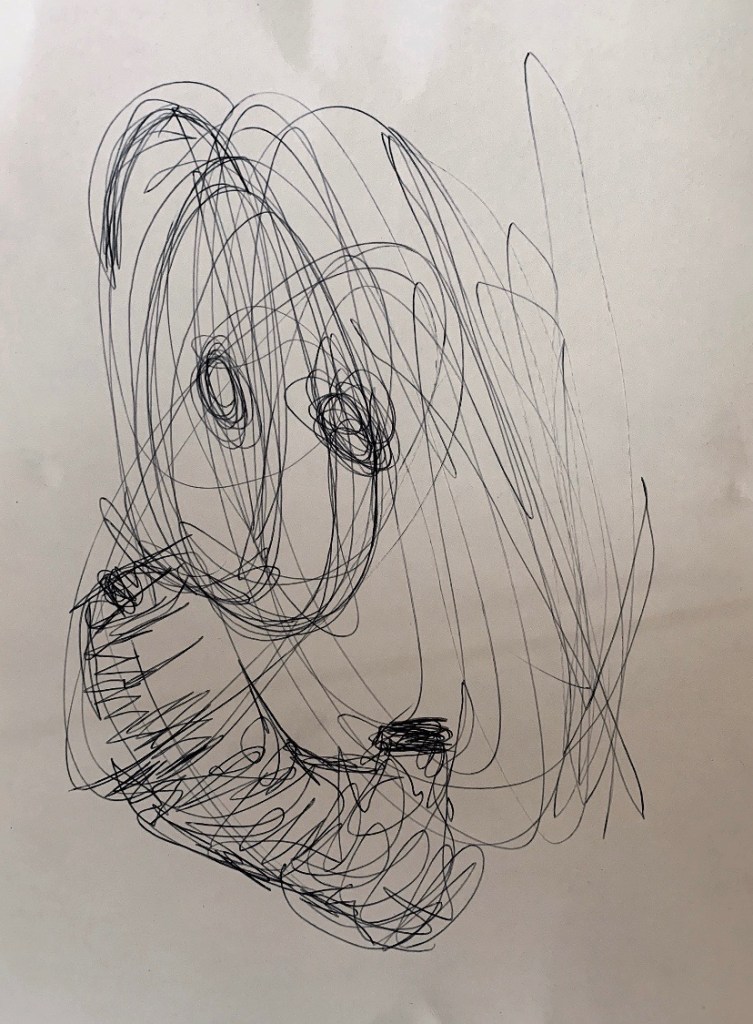
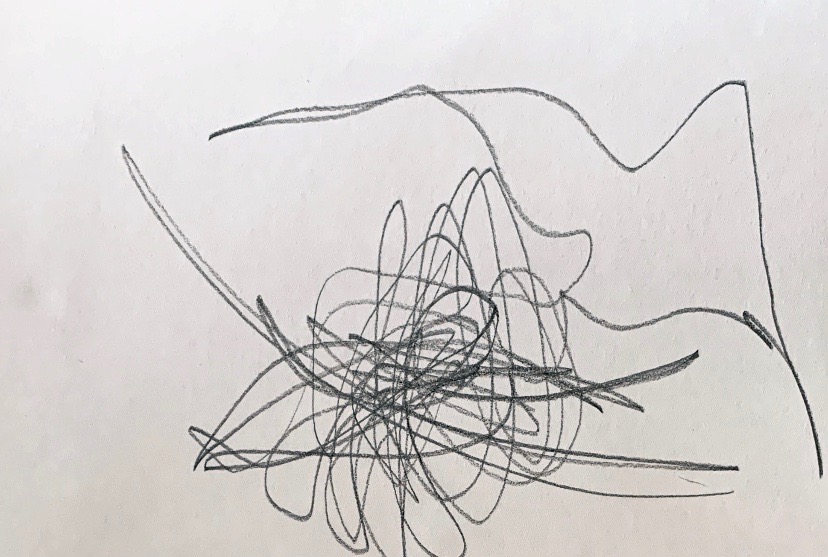
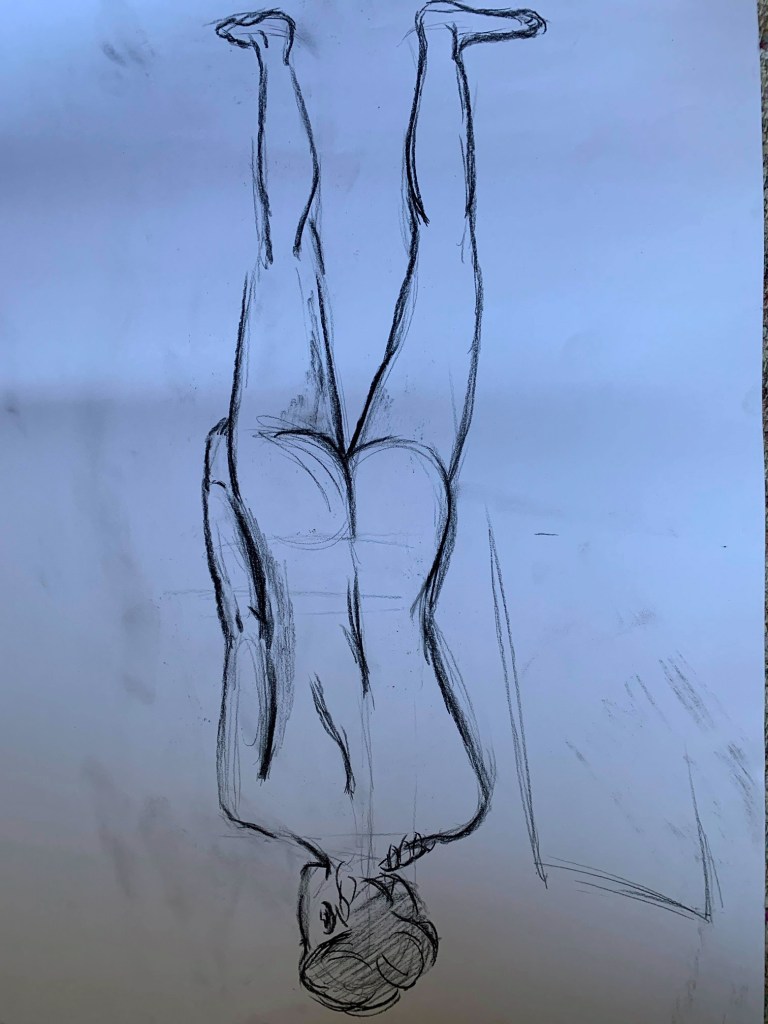
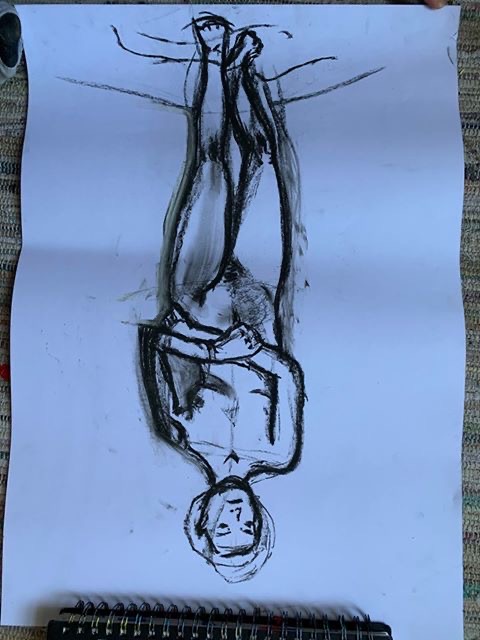
From all the installations i think i took the most inspiration from the ones which included plants and larger curved forms such as the bananas and water bottle. These are my first sketches where i spent a couple of seconds to up-to 30mins on each of the drawings sticking to using a limited range of materials.

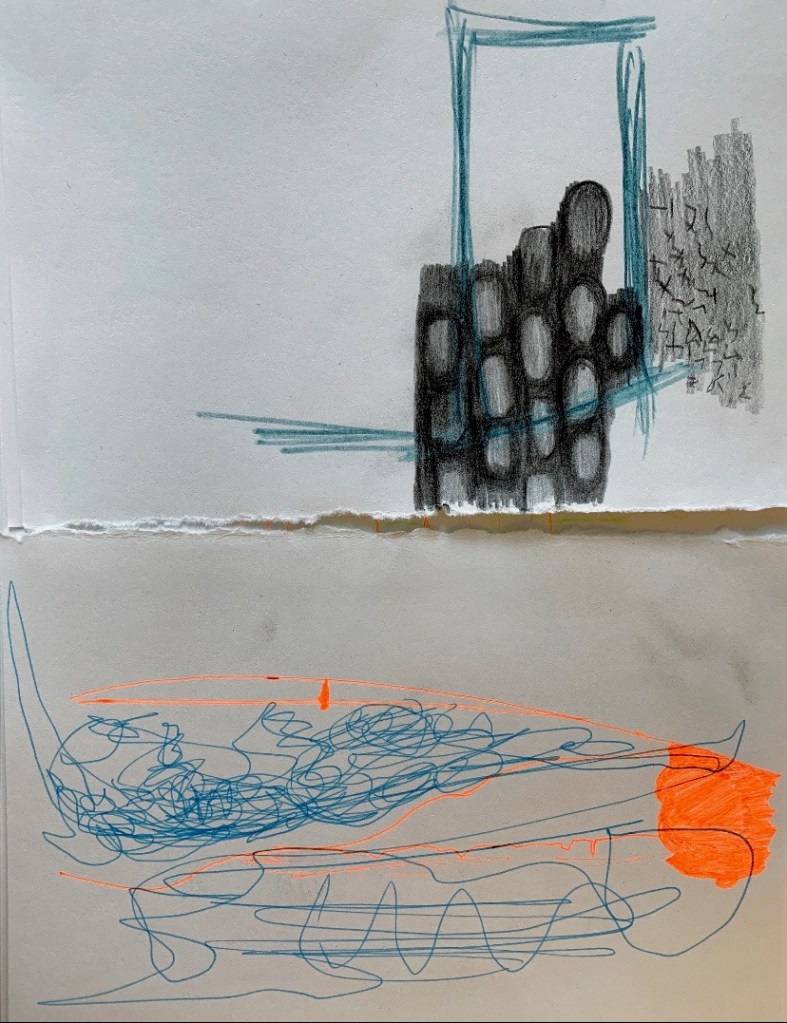
After my small crit and discussing what drawing I liked and felt were more successful I moved on to the next part of the task and used agin a limited use of materials and tried to think more about composition tone and texture.

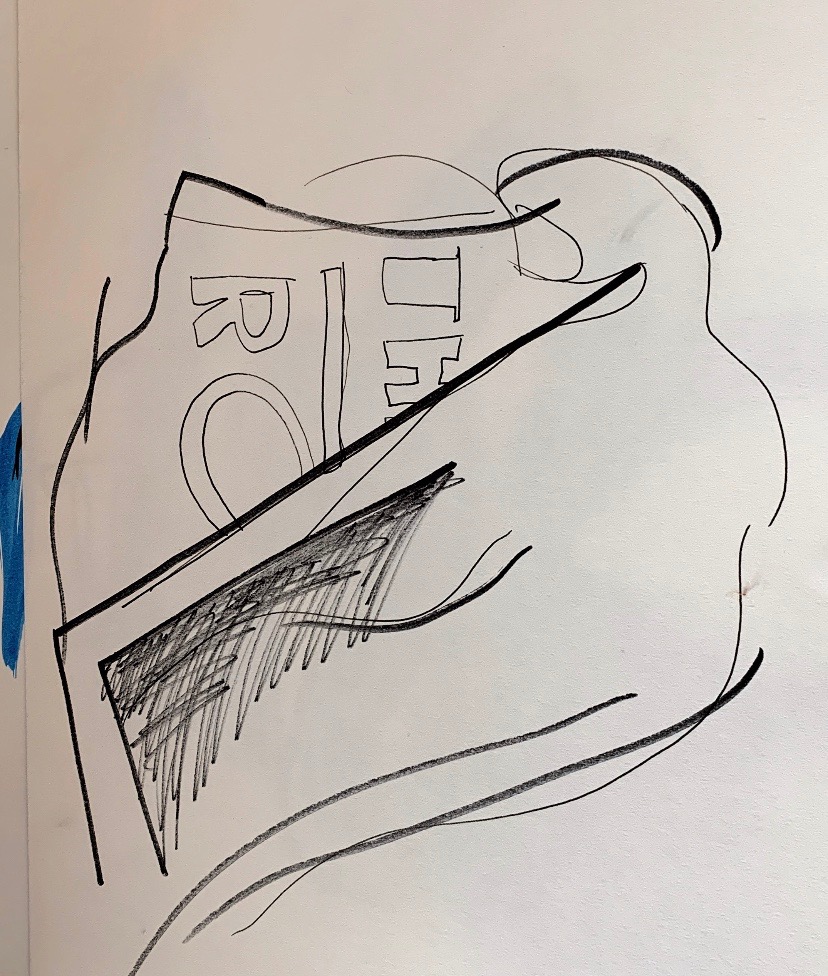
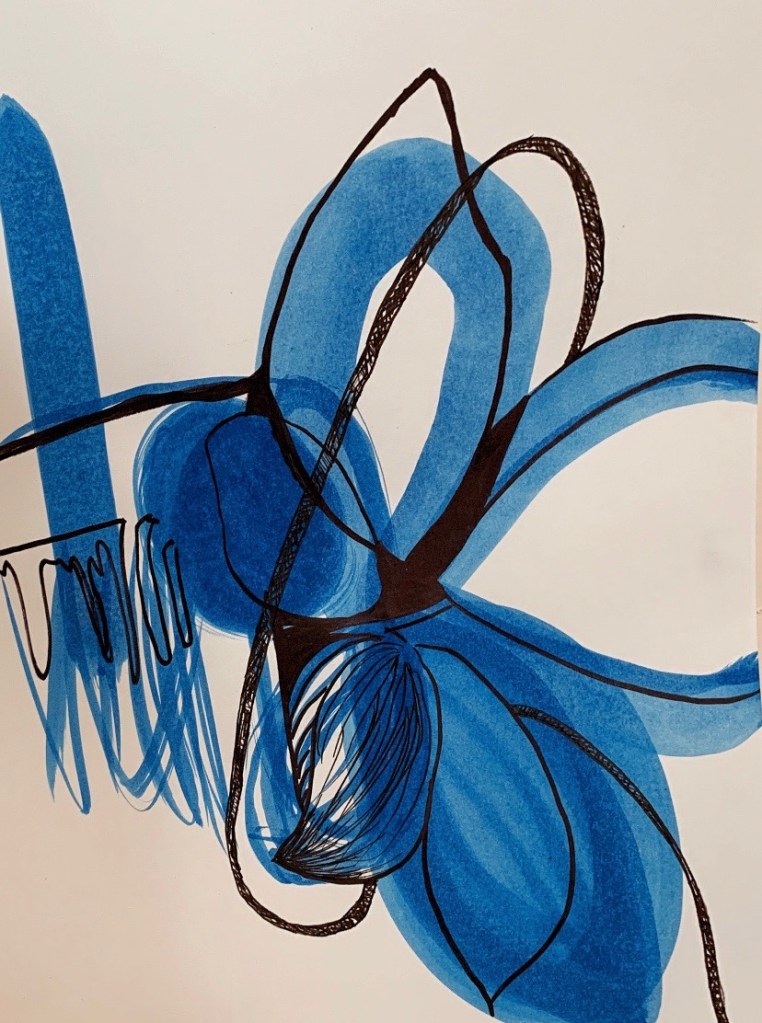
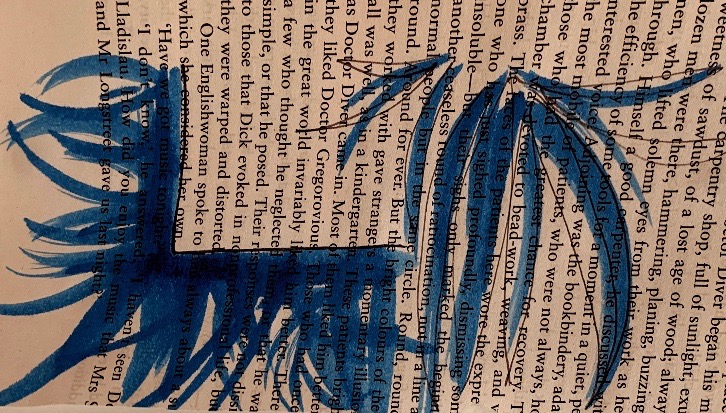
I really look a liking to using the blue ink as i’m really drawn to colour and i think its a big part of my practice and how i like to communicate themes as well as for visual purposes. Despite this i think the most successful drawing from these is where is used a combination of charcoal and h2 pencil as i feel it created the best contrast in texture and side by side i think compliment each other. I have also discovered that i like having a one single larger line to create the overall shape and lead your eye around the paper.

At the end of the week for Environmental Drawing I took my sketchbook and drew more loose quick sketches up Carlton hill and walking up and down my streets as I enjoy working quite quick just using pencils and pen. I wanted to just get a sense of positive and negative space focusing mostly on my uses of line and how much I could communicate about the space in such a short amount of time. I think moving forward I want to experiment more with the surfaces i am working on and the type of media i’m using. I also want to scale up my drawings as i think the sense of movement is communicated better when i’m using my whole arm and body.

Major Project Evaluation

My original starting point for this project was to explore the idea of keeping secrets an how we value them within ourselves as well as how we communicate them to others. This led me to start the majority of my research by asking people to confess a secret to me in the form of an anonymous note. Through speaking to people about how they feel about having a secret i learned how greatly that type of private information is valued to each person. This i where i started to think about the environment where secrets are held and thought about. I used photography as well as drawing and collage to start producing work to try and communicate this idea that secrets exist within quiet places when people are given quiet and space to think. These 2D works i felt were successful in showing the contrast between the secrets and the environment however to push my idea further i would have to start thinking about making work that considered my audience more than just the people i could speak to. Changing my approach by opening it up to an unexpected audience using the posters of other peoples secrets and confessions started to bring in the question of trust and feeling of exposure to the people they belonged to. Through these pieces i started to consider what kid of conclusion i wanted to reach. I wanted the audience to be put in a position to think and consider there own secrets. Asking questions to people had become my main source of material and text to use so displaying that in a way that leaves it open ended and without an answer from an audience or specific person i felt would be best. I felt i responded well to my initial theme and intentions while still exploring all of the other elements keeping a secret has; Trust, exposure, loyalty, taboo, communication, confession and isolation. I feel like i used my time on this project well and explored multiple mediums and considered all possible outcomes. I really enjoyed researching artists specifically those whole question how there work interacts with audience, specifically a Jenny Holzer and Sophie Call. I felt I also managed my time well and responded well to feedback from crits.

Secrets: Installation and Projection

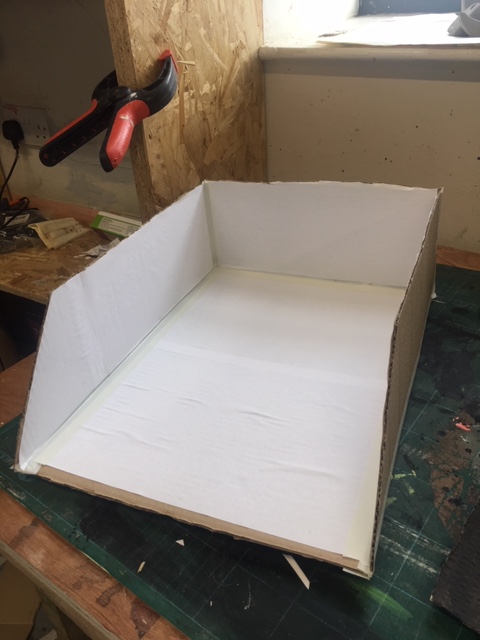
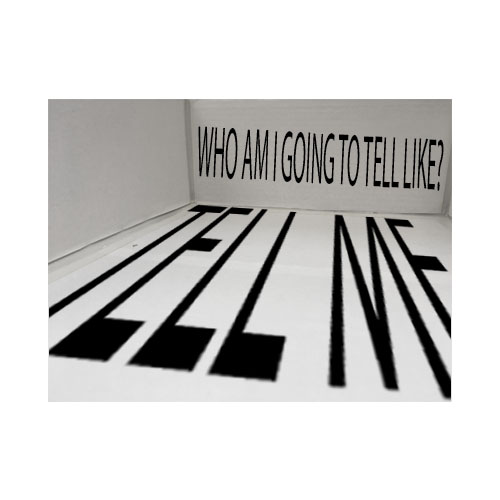
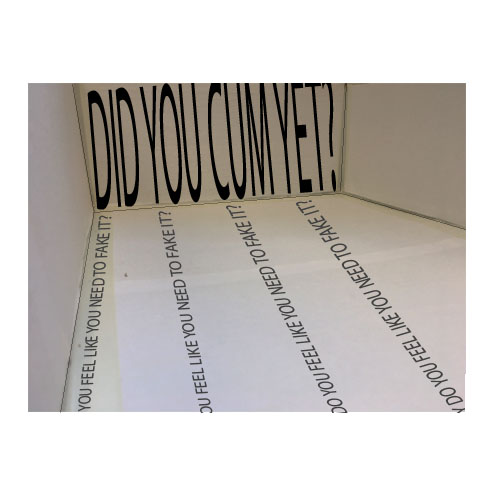
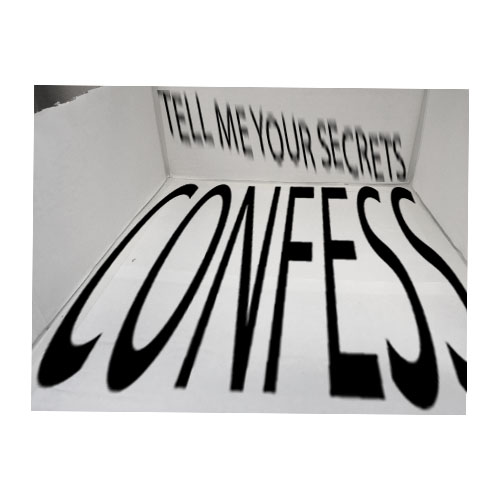
I made a small model out of cardboard with the intention of using it to project my secrets and confessions onto with a projector. I also want to experiment with Photoshop covering the walls with words and questions that trigger people to think about secrets that they are keeping to themselves. I also have an idea for a space where there is a low lit room where people are invited to go in and write a confession on the wall using a pen that can only be seen using a black light. Only after adding a confession do they receive a black light to read there own secrets as well as everyone else. I think is idea for a space is interesting as it puts a lot of importance on the exchange of information and questions how we value are secrets. We often use secrets and private information like currency and people put great value and importance n keeping them hidden in the dark.

I Also like the idea of having a large space where questions are posed to the viewer and they are surrounded by things to make them consider and think about this type of secretive and private information. Letting lots of people into this space would also maybe make the viewer more comfortable with the knowledge that everyone else is probably thinking the same thing.

FINAL OUTCOME

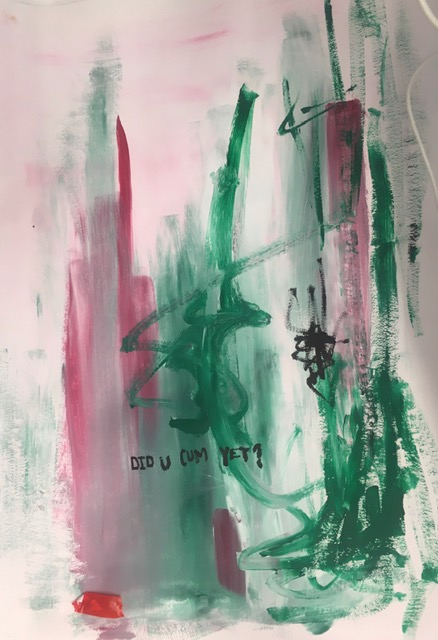
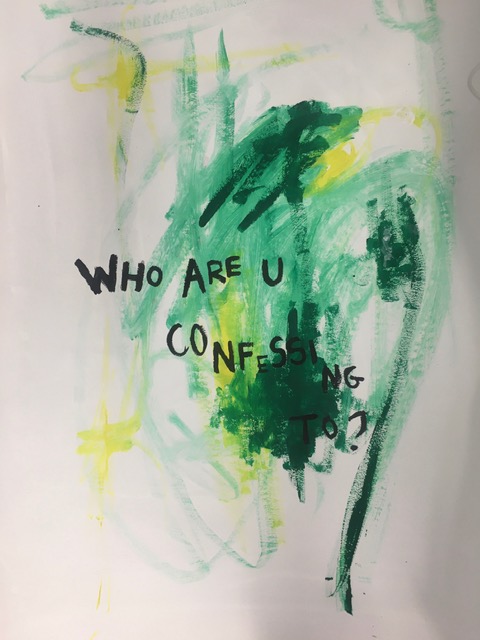
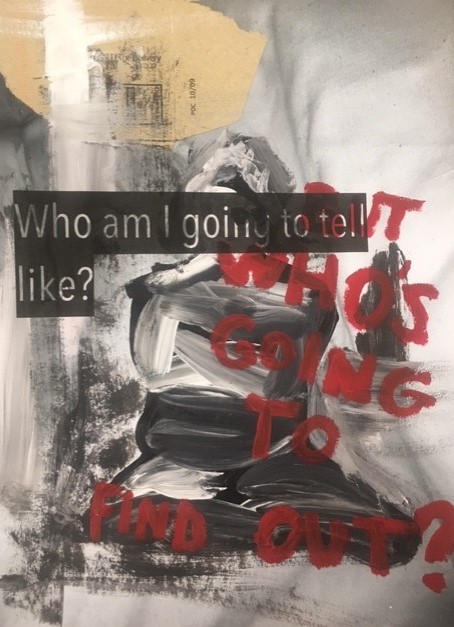
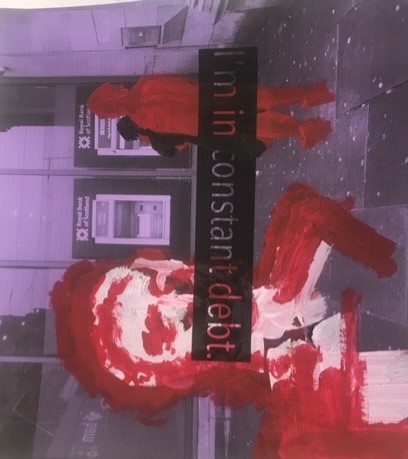
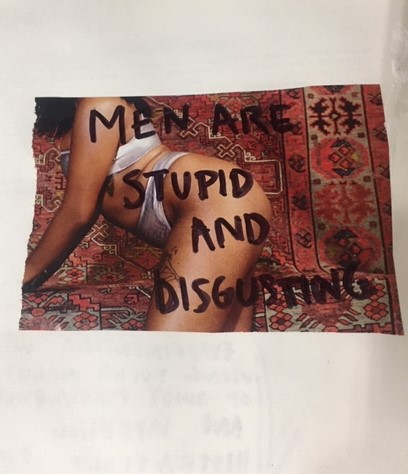
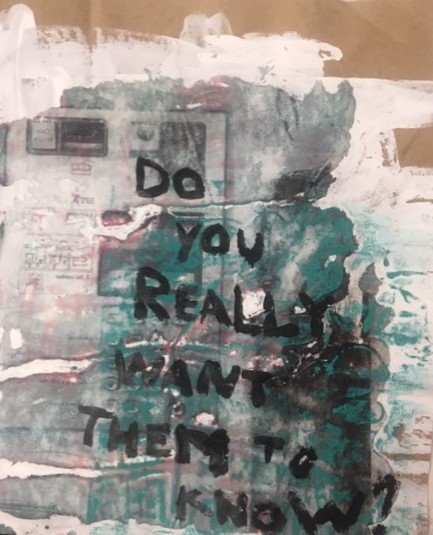
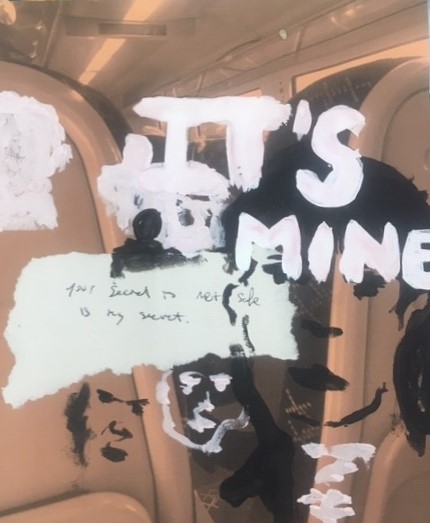
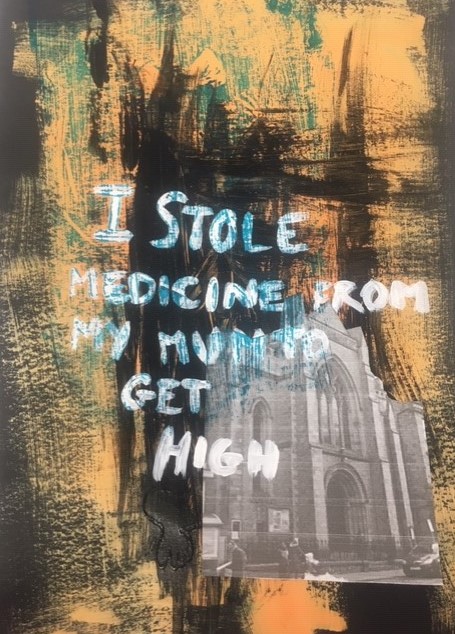
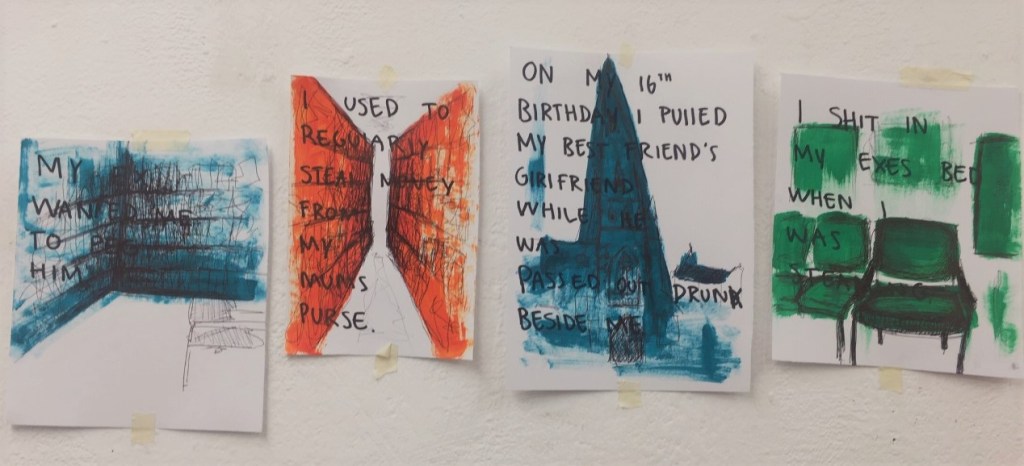
In response to the questions and spaces i was thinking about i did these quick 10 min paintings. I used quick movements before laying over a question or confession. The background of colour is confusing and distracting and the small painted letters can easily be lost in the rest of the painting. Just as secrets can become lost and easily to miss and cover over so dose the text in some of these paintings despite there importance to the work. Although these paintings were quick and small i feel they show a lot of the different elements and theme that i have been exploring and experimenting with.

Secrets: Work & Environment

Following the crit I wanted to focus on Bringing my work and confessions physically into these environments making them real rather than having them only exist on pieces of paper. All reactions and feed back so far has been from people I know either in studio or people i have spoken to about secrets. I want to start exposing these secrets and confessions to the environments were they are most often thought about. How i wanted to go about this and what kind of things i wanted to say i wasn’t sure of yet so looked at artists Jenny Holzer, Sophie Calle, Barbera Kruger and Gillian Weaing.

Truisms

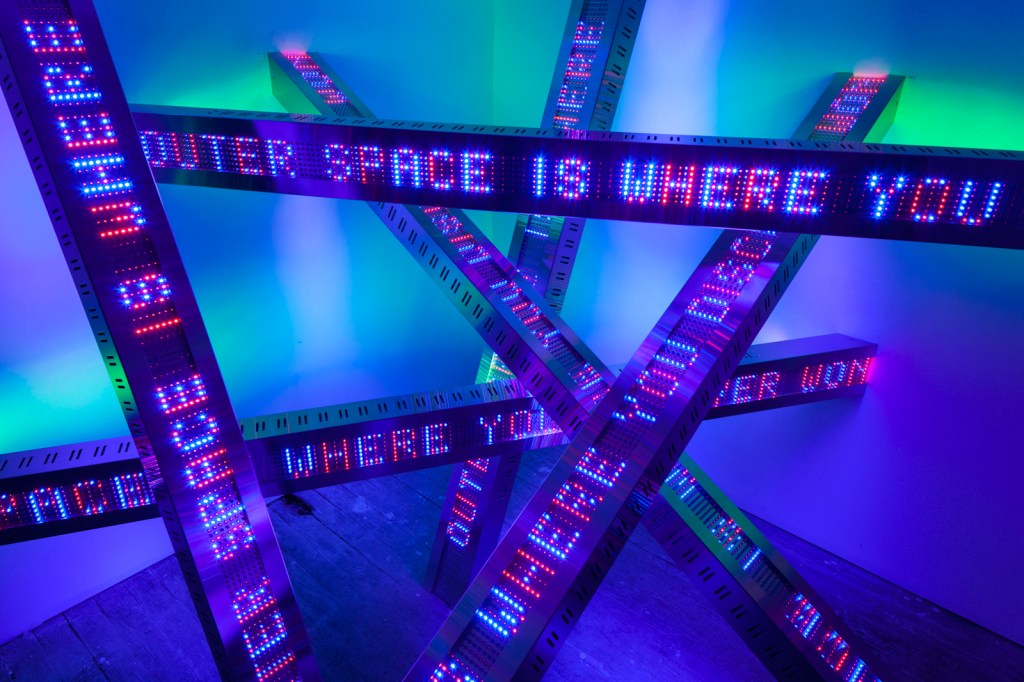
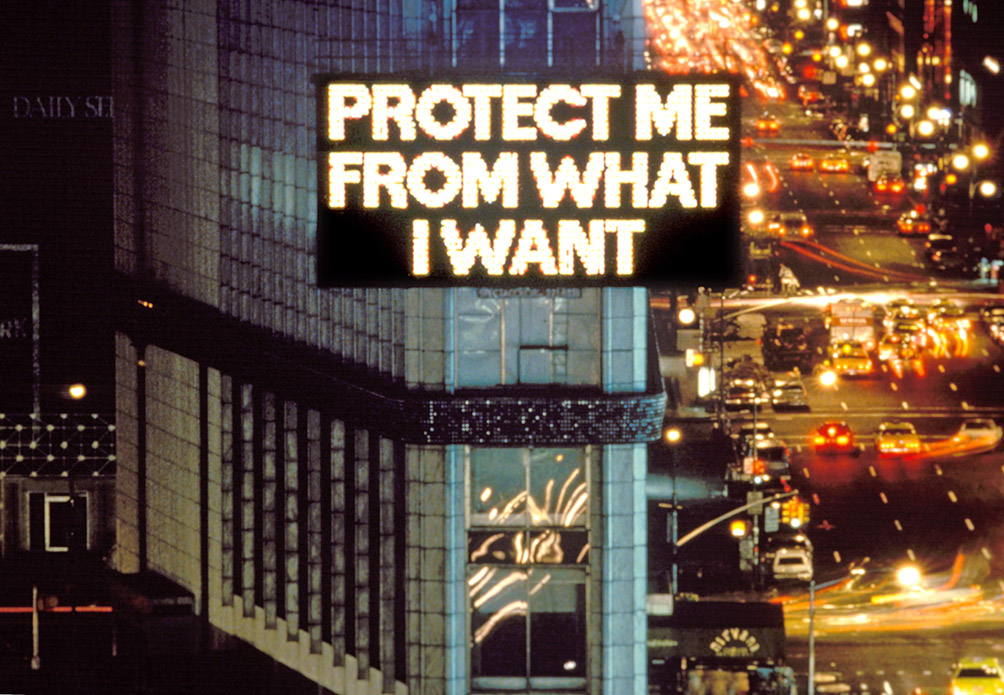
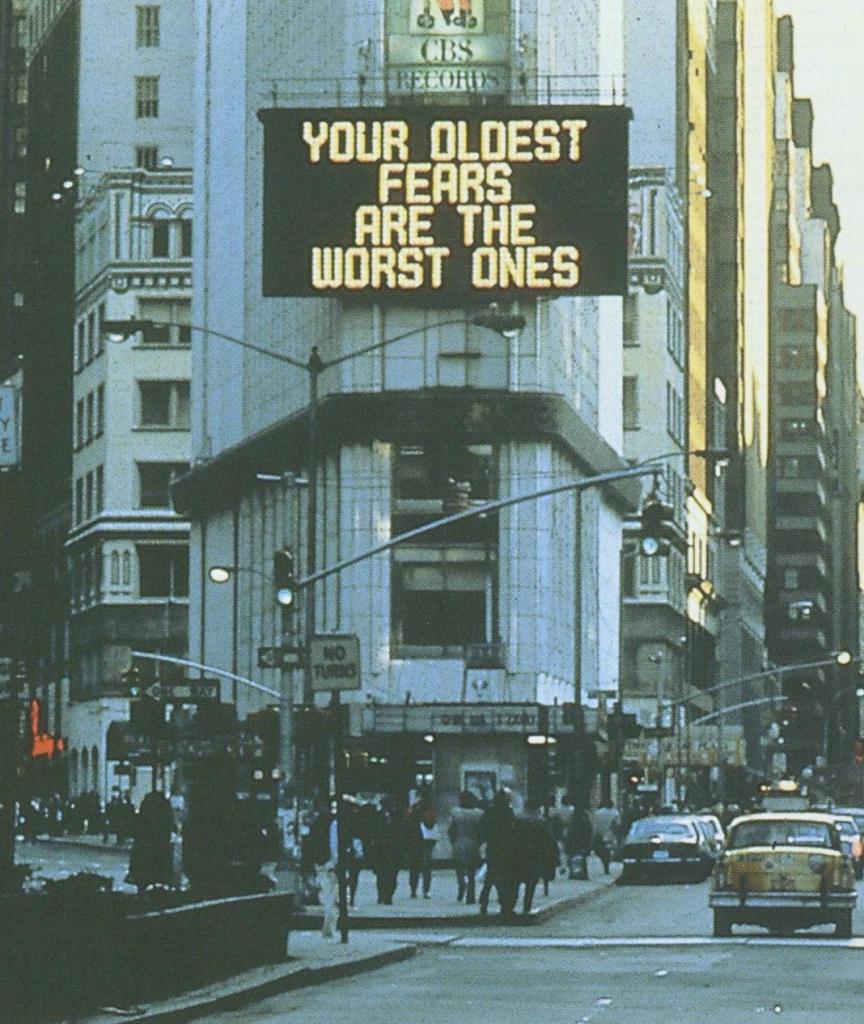
The artist uses her surroundings and physically projects her work on to them. Rather than having her work in an already artistic space (studio or gallery) where people who are coming to see the work already have a preconceived expectation that what they are looking is is considered art. By placing it outside in very public spaces it opens it up to be interpreted to anyone in anyway. Her ‘Truisms’, 1977-79 are a collective of nearly 300 phrases and slogans of modern cliches and commonly held truths. The work was at first infiltrated into public ares via stickers, T-shirts and posters. Later, Holzer started using electronic displays. In 1982 she blazed these messages across a giant advertising hoarding in Times Square, New York. The Truisms are deliberately challenging, presenting a spectrum of often-contradictory opinions. The artist hoped they would sharpen people’s awareness of the ‘usual baloney they are fed’ in daily life. I liked how the artist gradually increased the spread and scale of her work and reflected how huge companies and manufactures manage to invade or space everyday through advertising and media. Her work also invading everyones space but instead of trying to sell them nothing asked them to question what they were being told.

Posters Development

I started to think about putting these secrets and confessions physically out on the street and in ares i visited on a daily basis that I could find myself being quiet or with my own thoughts. I experimented with just photocopying the original confession slips as well as writing them out just using acrylic paint and cutting out letters from magazines.


Photocopying– captured the authenticity of the original confession each persons handwriting added another felling of identity to each bit of paper as if that person themselves had decided to share and spread that secret
Hand painted– This added a more human quality to the photo coppys as i physically had to paint the message in my handwriting on the paper. It felt more like i was the one exposing this information and trust of that person despite the fact it still remained anonymous.
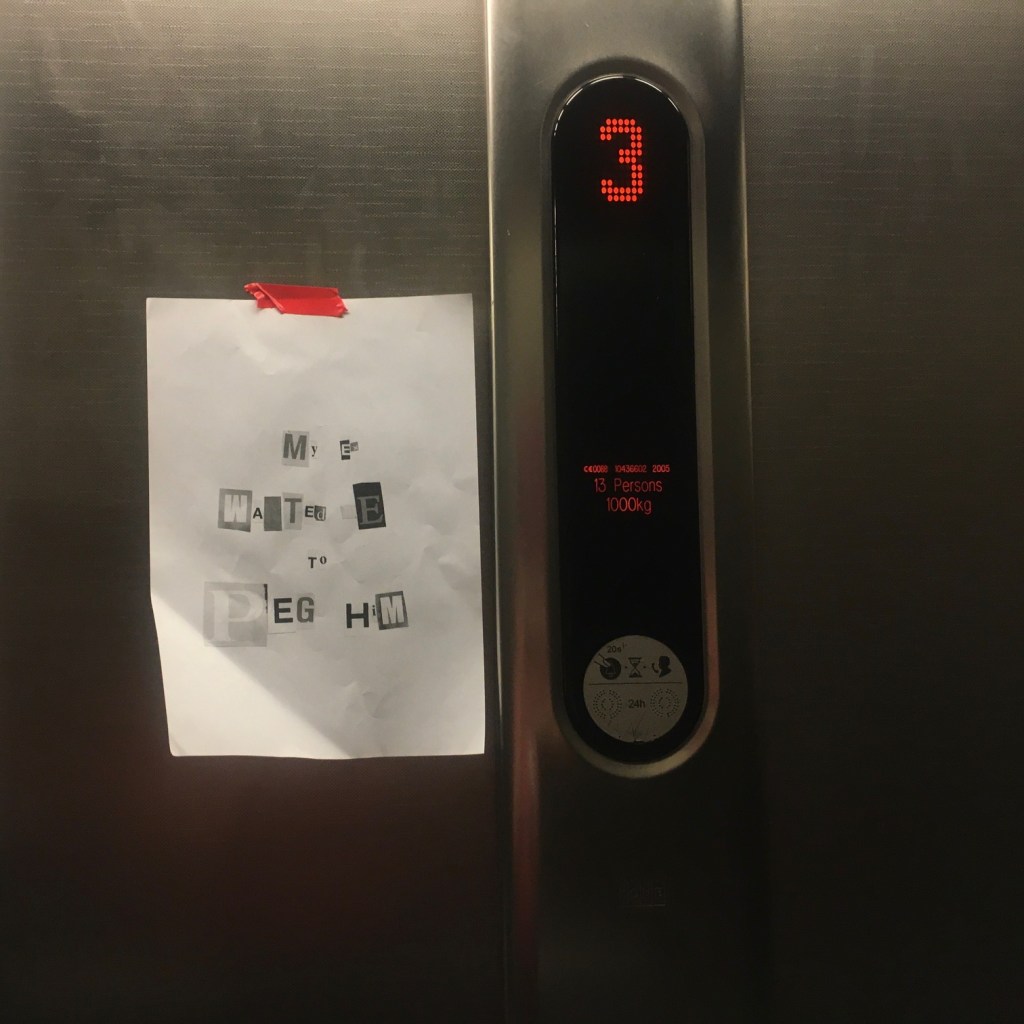
Cut outs – Using the cut out letters from magazines to spell out the confessions made it feel completely anonymous as it took away any form of identity and the act of writing it out had to be a lot more time consuming and thought out.

While I liked all of the methods for their own individual consensual quality so i decided to use a mix of them simply because i wanted a range of styles and didn’t mind the inconsistency as each persons way of keeping a secret or telling someone my differ from person to person.

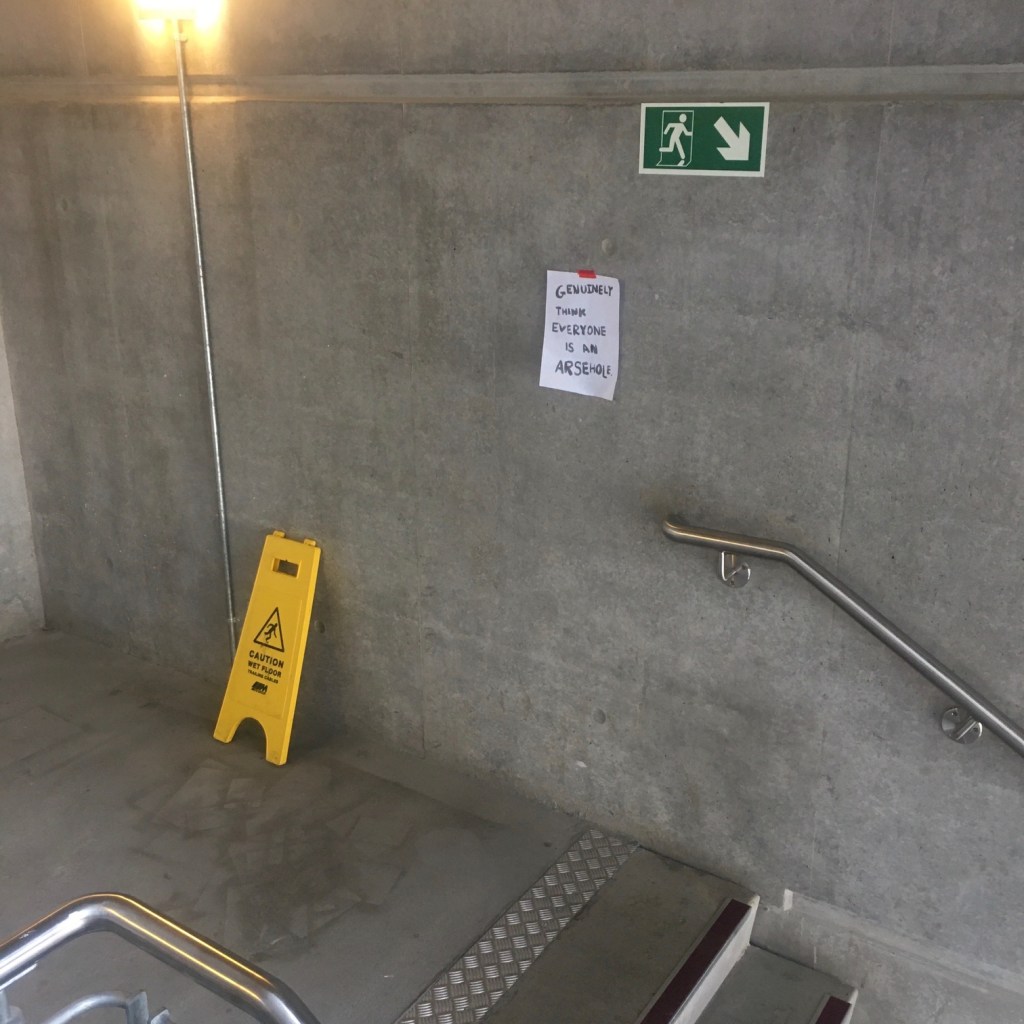
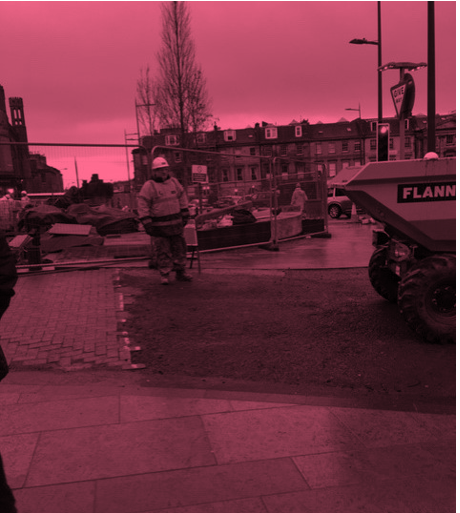
The locations for the pictures where all places i visited over the course of 3 days where if i found myself alone or it was particularly quiet in a public area I would lave one of the confessions at random. I then took a shot video and left. In total I took around 20 photos and these ones were my effective as i feel they look the most alone and quiet in a sense because of the lack of other people but still let you know enough yo image them in an area where a lot of people might pay attention to them on passing.

Below is the video to accompany the images I took.

I took short videos of all the posters I put up and combine them. I like how the video turned out as it feels very lonely despite all of it taking place in very public spaces. I also like the fact that they seem very discarded in the places they have been put up as if only thought about for a second or two. The noise of some of the videos was important as i wanted the feeling of things still going on around the confessions just as people go on carrying these secrets.

Secrets: Week 2/3

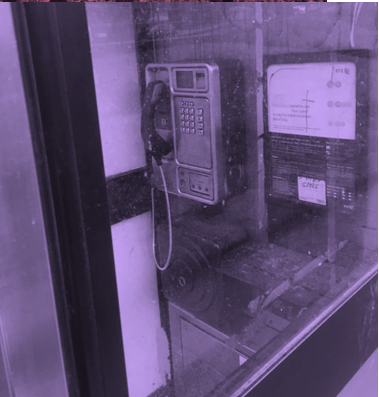
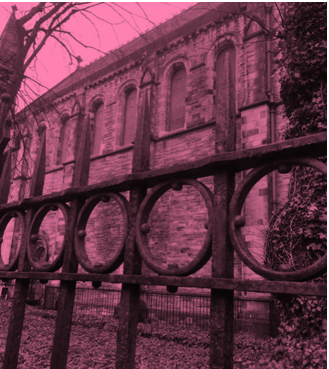
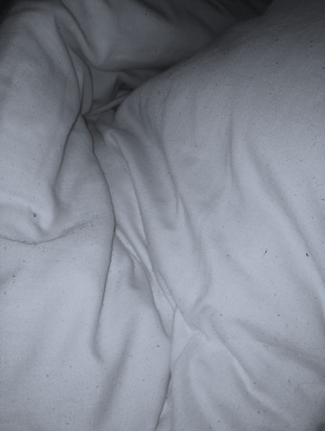
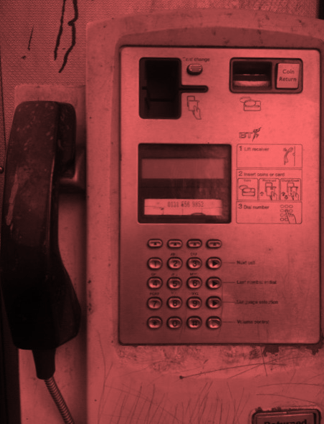
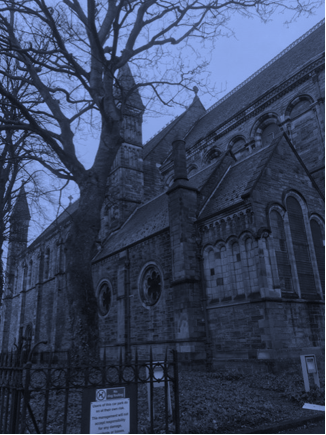
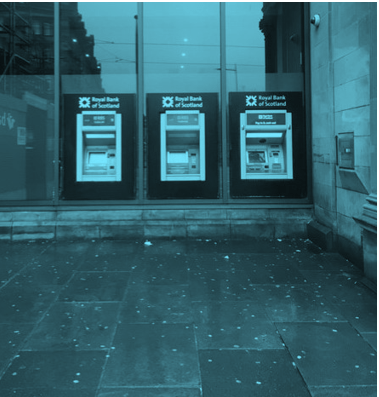
taking and editing these images i found that layering over a coloured filter made them more interesting and look better when layering with text and other images. The colour overlay also makes these places seem more still and diluted almost more quiet and dream like, it pushes the images into the background.

Research

I also started researching into why people feel the need to keep secrets and how it effected them. 97% of people are keeping a significant secret at any one time. This makes this idea of having one more relocatable and feel less important knowing everyone else has the same “keeping” responsibility. Despite this topic occupying all of us, there is little research on what effect it has on us in our every day life. The ability to keep a secret is a big milestone as a child. It confirms this idea of having trusted information between another person. A lot of my project is going to revolve around this feeling of trust and inclusiveness

The majority of research suggests that keeping a secret weather that be just with yourself or a select few people can leave you feeling anxious and weighted with your own information and responsibility; sharing it with other people may only make it worse through fear of them telling more people. The idea that you are the one holding this information and choosing to share it or not seems to have negative impact on your mental and in your relationships with others. However the problem inst the actual keeping of the secret its the idea of having to live along side them in our thoughts. This is why i wanted the secrets i gathered to be in and amount my collages and images of places where your mind dose wander.

However in my own researcher as i found speaking and communicating with other people about my secrets and theirs a very positive thing. There is this idea and feeling of inclusiveness; being in on something and feeling valued enough that person would communicate something so valued and concealed with you despite the fact that that is you taking on more secrets that you need to keep. In relationships with other people i think that secrets are a real sign of trust and confessing things about yourself makes you feel better as you often get a similar secret or confession in return.

I wanted to explore the 2 types of secrets I was receiving and could differentiate:

  • Shameful or embarrassing subjects- sex-money-cheating
  • What people are really thinking – social commentary and thought and the social pressure to be polite

Layering/Print/Paint/Collage

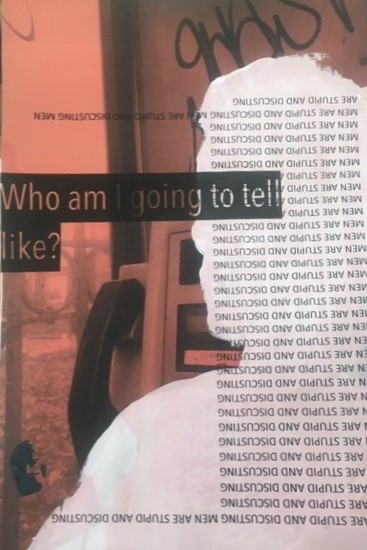
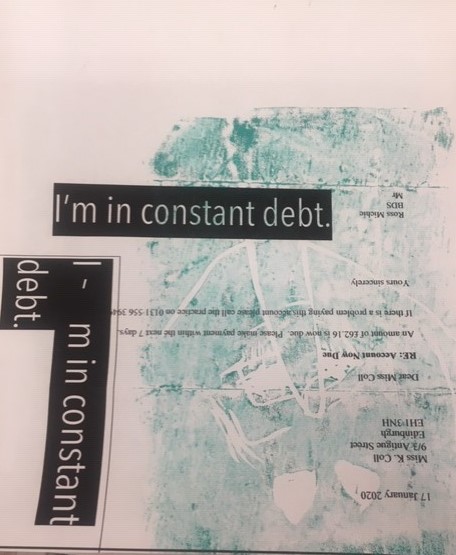
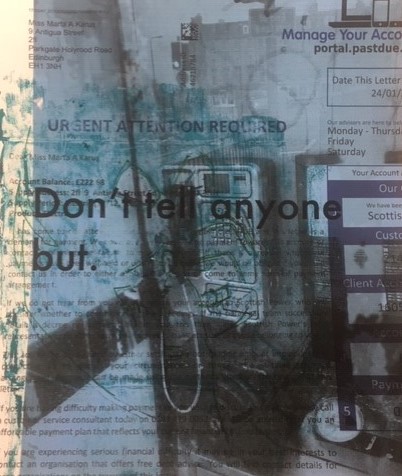
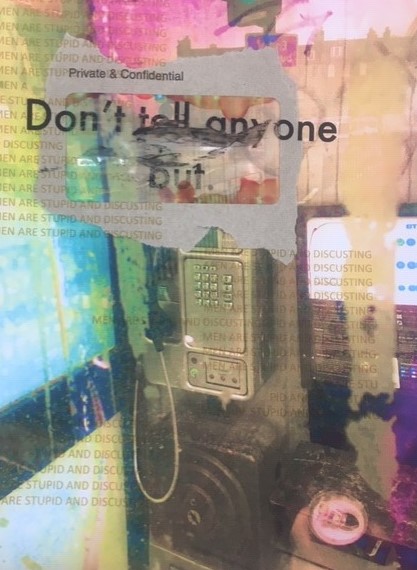
I experimented with layering college, painting, printing and text. As well as including the original confessions i included phrases like
“Don’t tell anyone but”
“Who am i going to tell like”
Phrases that came up a lot when discussing a secret or confessing things to someone. who am i going to tell becomes a question of someones character as appose to an actual question. Asking the person who is telling you if you trust them enough not to tell others. Because as an adult the reality is that you have the ability to tell anyone physically or even over social media. It reminds me of making a ‘pinky promise’ when you were younger.

Major Project: Secrets

starting point:

The initial theme for my projects secrets and my plan is to investigate and explore why and when we keep them. I would also like to research into the communication (or lack) of secrets and the idea of trust and confession.

I moved on to consider all the different elements I could respond to

  • Being told to be quiet- where/why
  • knowing something is hidden beneath/from you – layering images
  • Chinese whispers- changing of information throughout poor communication
  • The power of feeling inclusive
  • Negative feelings associated with having a secret and not feeling authentic

Initial Responce

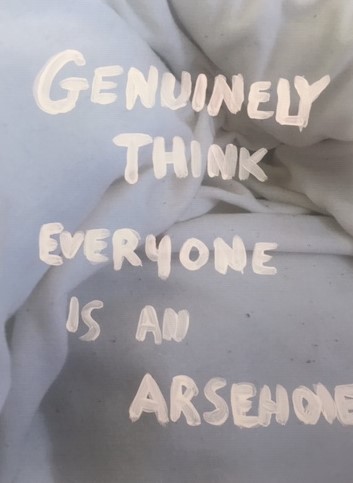
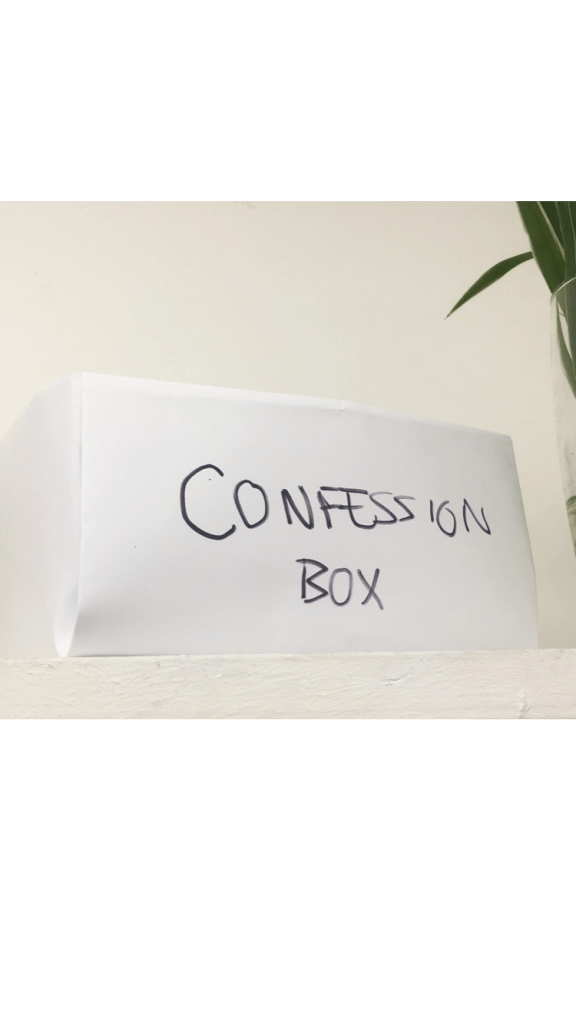
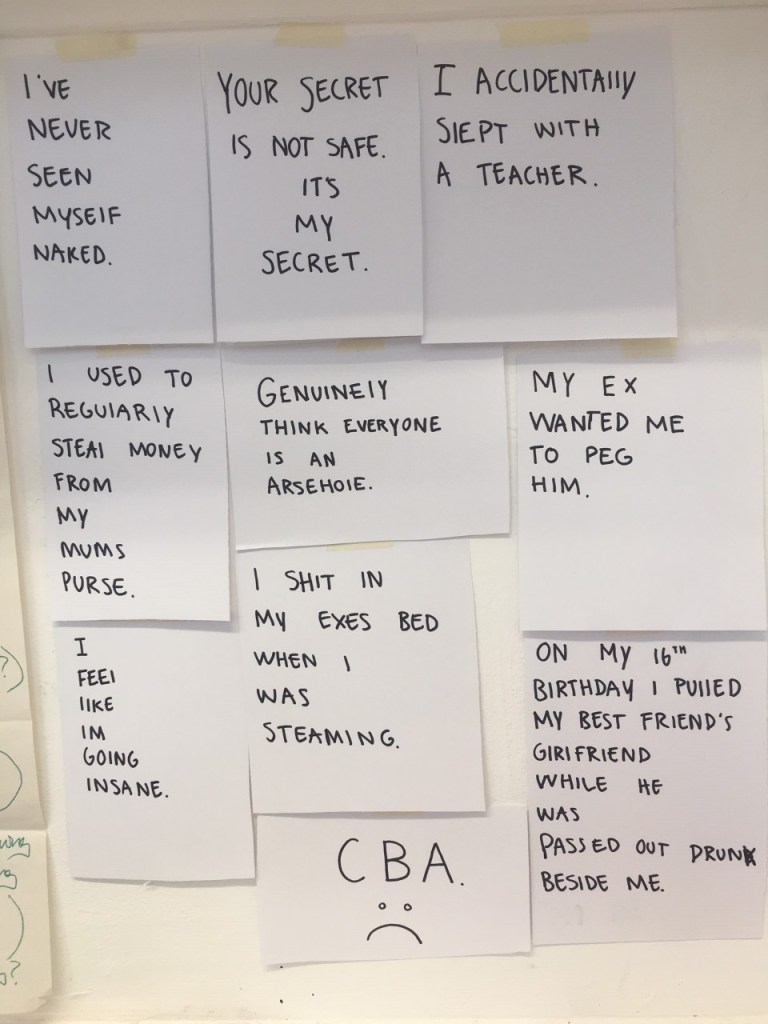
As my initial response to my project idea I asked people write down a secret or confession anonymously. I then re rote them in my handwriting just so they were consistent looking and it was easier to read. Me re writing them also took away and chance of recognising someones hand writing. The confessions themselves all focused around traditionally taboo subjects and were things people would maybe be embarrassed to admit to allowed. However, tho writing these things down isn’t the same as expressing them vocally I think that putting it down on paper and into text makes it feel more real and permanent. There were also some that were things people often think or wish they could express in response to what’s is happening around them or who they are around but cant because of social pressure to be quiet and polite. For example “CBA” “I think everyone is an arsehole”

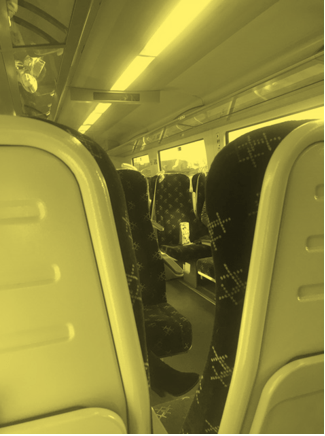
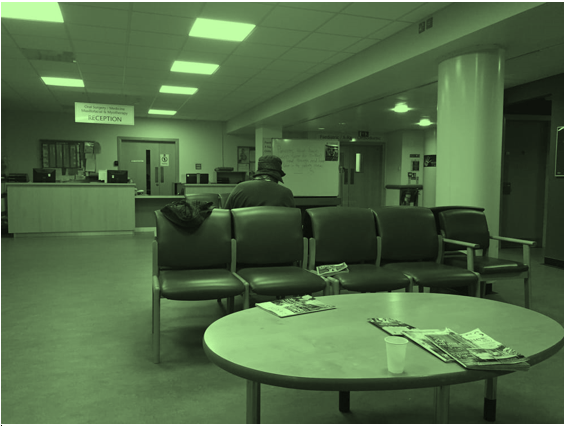
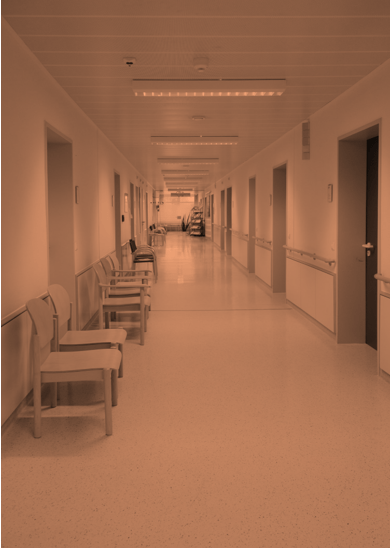
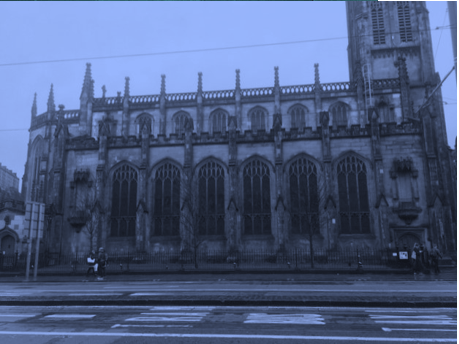
This then got me thinking about place and where and why we there holds this social pressure to be quiet and respectable. Places like churches/bus/ stops/ trains/ waiting rooms/ in bed/ when someones on the phone. So i went and took images and sound clips of all these places i associate with quiet and being reserved. I also thought it was interesting that these are all places we tend to fine our-self’s alone and with our own thoughts – things that may be considered secretive are thought about in very public spaces.

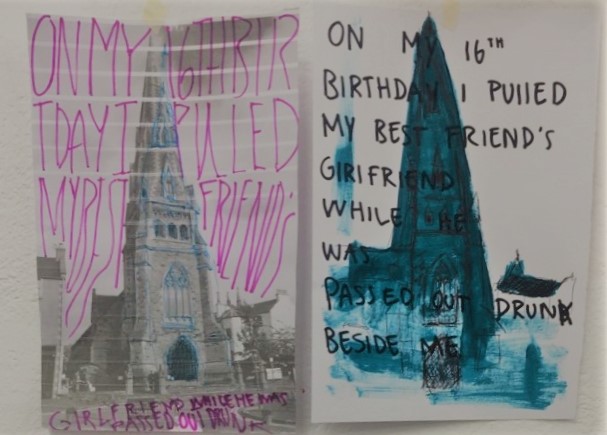
Before taking my own images i just did some small experiments with layering the confessions with found images of these locations that are associated with being quiet.

I experimented with layering one on top of the other however thought that the image of the place layered over the confession worked better both visually and conceptually – the inner secret being hidden and compressed to the persons head because of the social environment and location.

I liked the layered contrast of the images and text as well as the shapes of the images hiding and obscuring the messages underneath. moving forward I wanted to experiment with layering and collegeing the two elements again with my own images.

Secrets: Artist Research

Jenny Holzer

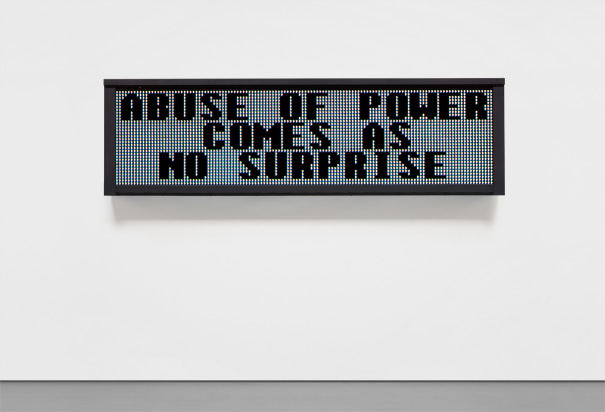
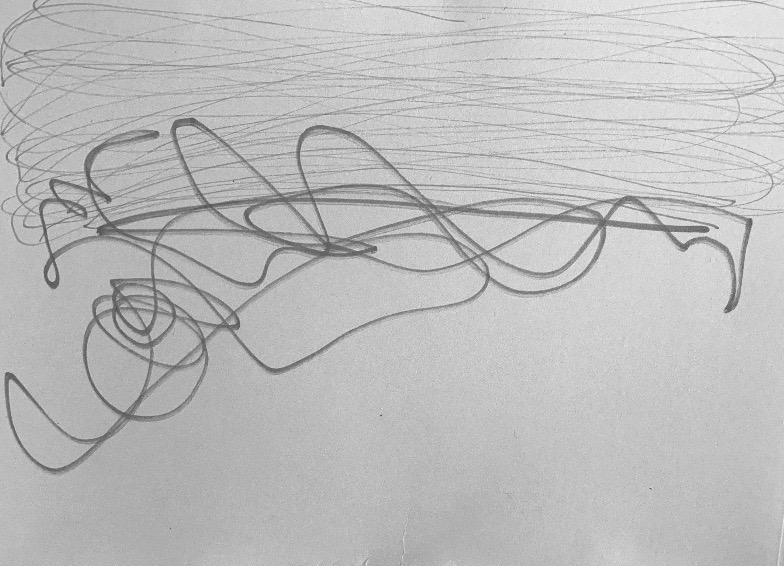
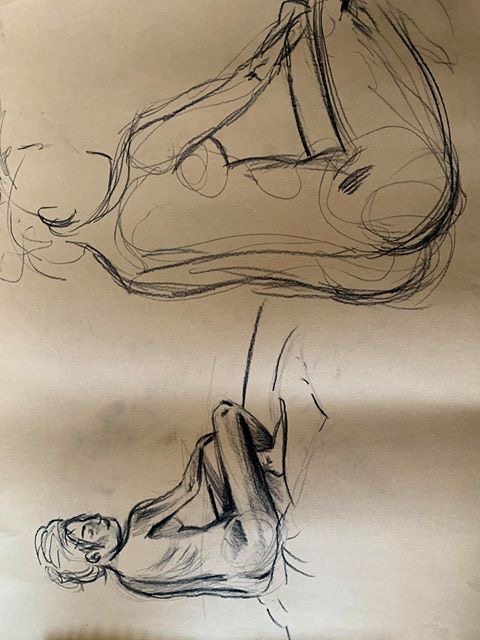
The artist was born in America 1950 as is based in new york. The main focus of her work being delivering messages using text in public space. Here conteporarys include artists like Cindy Sherman, Barber Kruger and louise lawler. She is associated with the feminsit artist that emerged in the 1980s. The public apperance and grand scale of her work is crutual to her practice as well as using projections prints and neon text. Although her diverse practice incorporates a wide array of media including street posters, painted signs, stone benches, paintings, photographs, sound, video, projections. Her work pollutes and takes over structures using this mass media asthetic of being oversaturated and VERY public. her work is directed at the casual viewer rather than gallery visitors. Her bringing her work ou into public spaces i find the most interesting. exposing her audience rather than inviting them. I want to incorporate this elemnt of playing with the idea of audience; who and where am i trying to engage. Using text as a way to ingage the viewer is also something i want to experiment with.
Christopher Wool

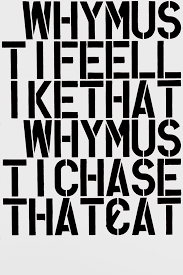
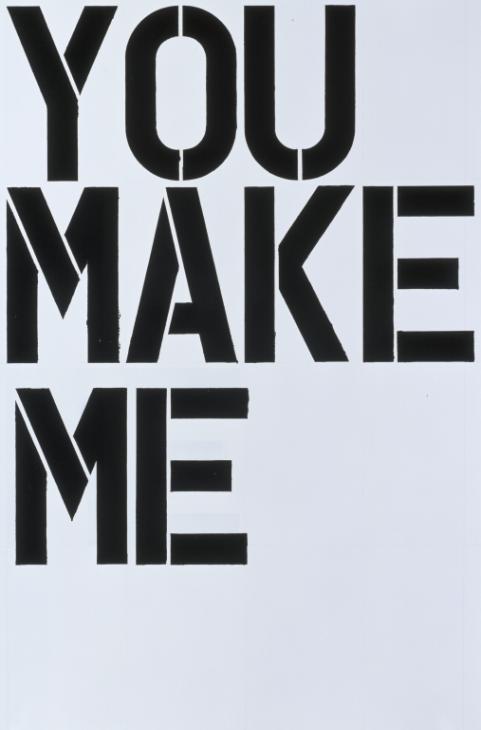
American conceptual artist who is based in New York. He I best known for his paintings of large black letters on white canvases. These works began in the late 1980s inspired after seeing black graffiti on a new white truck. The words tend to be broken up by grid system or have the vowels removed so much so that they often need to be read aloud to make sense. Although he is best known as a painter he has a large body of black and white photography of the streets of Chinatown. I like the straight forward and confronting attitude the artist’s work has. This quite literally black and white message leaves not much to be debated in terms of meaning and message. Forcing his audience to read and understand. 
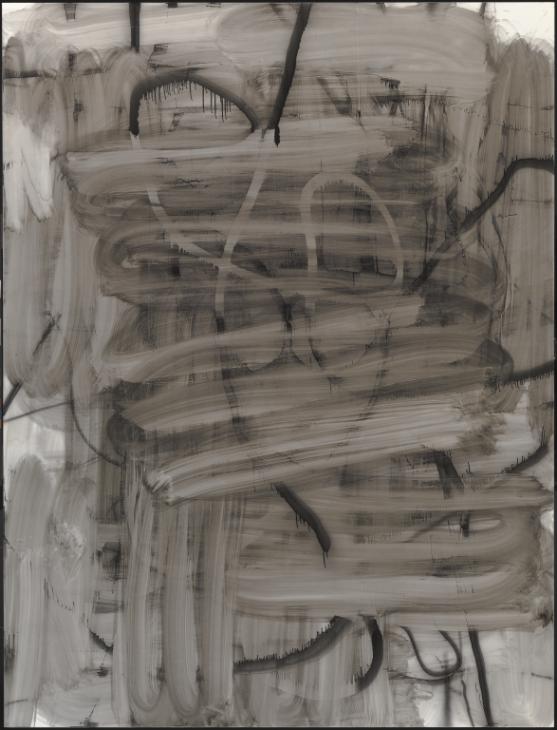
Jean Michel Basquiat

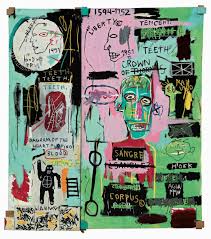
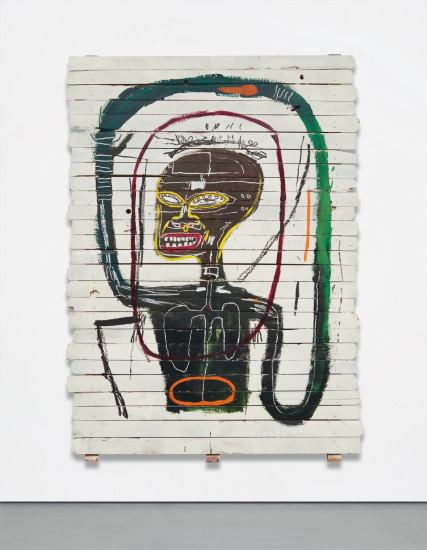
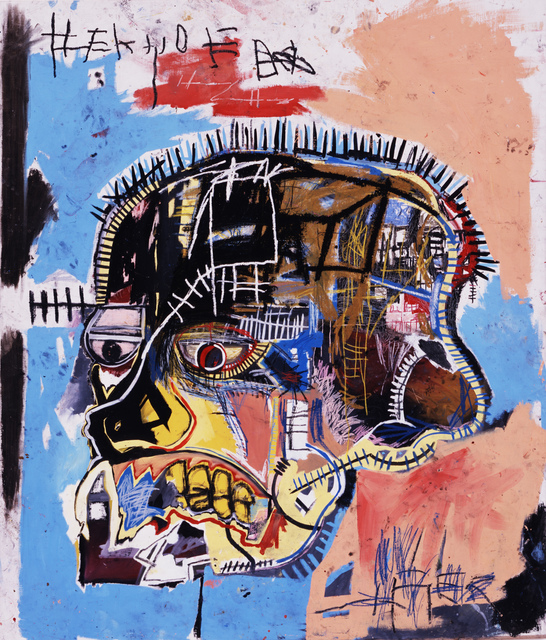
Jean-Michel Basquiat was born in 1960 in America. He started his practice as an informal graffiti artist in the late 1970s where the artist was influenced by early hip-hop music culture. He then started his Neo-expressive paintings in 1980 where they began to get attention and exhibited at galleys and museums internationally. His art focused on themes of wealth, poverty and immigration. He worked with a range of media poetry, painting, drawing and married text and images amount abstract figures. He also repeatedly mixed historical information with modern social commentary. He used his art to attack power structures and make his audience question systems of racism. This engagement and again confrontation with audience is something I want to focus on.

Ed Ruscha

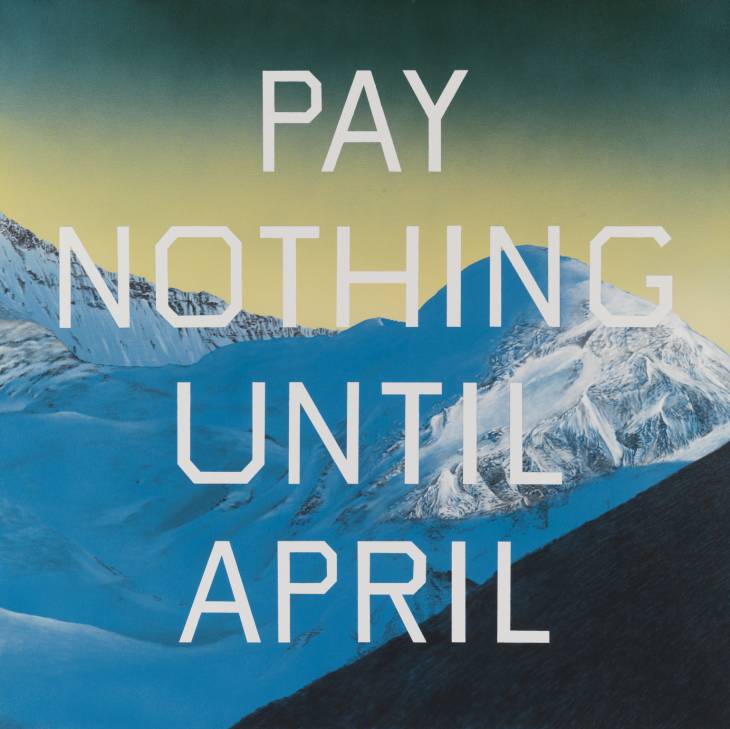
Born in 1937 in America the artist is associate with the pop art movement. He worked with very mixed media of painting, printmaking, drawing, photography and film. His early career and education was rooted in commercial art and advertising. His very first word painting was displayed in 1961 and since then the artist has included text within his work. These phrases are often comical and simplistic. These phrases often “just occurring” to the artist almost as just a passing thought or phrase that can be interpreted in a multitude of meanings. Experimenting with humorous sounds and rhyming word plays, Ruscha made a portfolio of seven mixed-media lithographs with the rhyming words, News, Mews, Pews, Brews, Stews, Dues, News in 1970. Again, using text in a short and pushy manner I find really effective and think I am going to experiment with and use within this project. 

All of these artists are asking questions at their audience whether that is very publicly or in an art gallery setting. Question who you audience is and how you are going to reach them is something I’m going to explore more in this project using text and imagery.