I think I engaged well at the beginning of the project researching a wide range of artists and took well to researching the specific concepts I wanted to include in my work. When I started developing work I felt I could easily move from one idea to another exploring different mediums including different combinations of modrock/plater/clay. However, towards the end of the project I lacked drive and was struggling with how I was going to present my idea as a final piece. The final work itself lacks shape and doesn’t engage you to move around the work. I Could have experimented more with how to present the final outcome and played around with how the work could move. As well as this more of my development work could have been presented in order to show the movement from each stage as I feel my final outcome of work felt really underwhelming in comparison to the amount of research I had done at the begging of the project. One successful element to my final outcome I think was the colour pallet as it related heavily to my research and concept. If I had had more time, I would have also considered it being interactive with the viewer, this would also make the final outcome more engaging and meaningful.
Tag Archives: 3Dpractice
3D CONTEXT: ARTIST RESEARCH
Phyllida Barlow
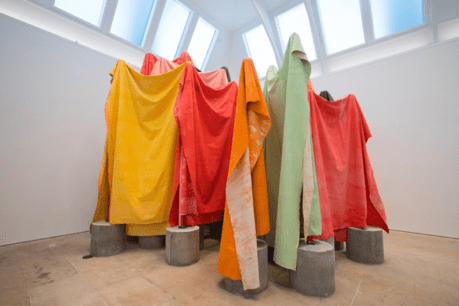
Although born in Newcastle upon Tyne in 1944 Barlow was brought up in a London where she studied at Chelsea College of Art (1960–63) where she was able to learn that the act of making was in itself an adventure. A sculpture that falls over or breaks is just as exciting as one that reveals itself perfectly formed. All the acts of making are valid. She creates work with the intention of making something larger than herself, reflecting and contrasting with her environment as well as attaching new meaning and purpose to existing material’s. She also explores the relationship between her work and space it occupies. She repeatedly questions whether the space dominates the work or the work dominates the space.
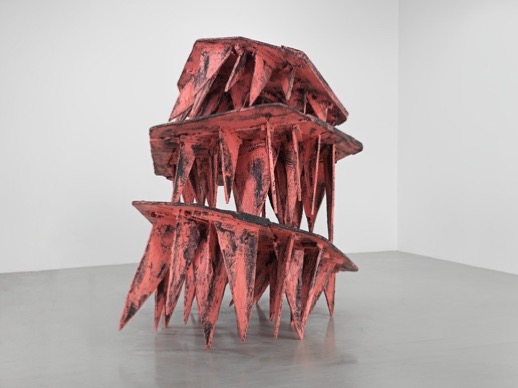
I like the artists use of scale and playfulness, her work is almost childlike and messy never appearing truly finished or polished. Her careful and exciting use of bold colours also add to the child likeness of her work. The sculptures and instillations encourage the viewer to move round and through it from all angels. The artist uses the space to its full potential and considers every aspect of the space it will fill. I also like the artists inexpensive use of materials such as cardboard, fabric, timber, polystyrene, plaster, scrim and cement.
Sara Barker
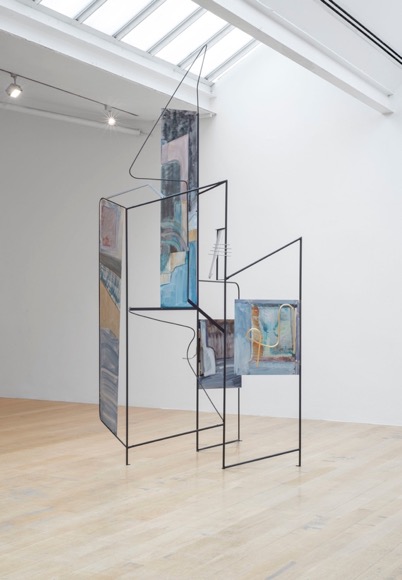
Sara Barker was born in Manchester in 1980. She studies at Glasgow School of Art in the city of Glasgow where she now lives and works. The artists work braks the boundaries between painting and sculpture. Skeletal structures in aluminium and steel presented in wonky rectangular shapes with contrasting lines, as though uncertain of themselves. Their surfaces are then coated with layers of oil paint, gouache and watercolour. The artists colour pallet resembles that of a landscape watercolour. Barkers work evokes ‘that top-heaviness and precariousness’ of sketching in three-dimensional form. As such, her combinations of bespoke materials challenge traditional perceptions of structural solidity, the lightest often providing the weightiest support for the basis of the sculpture”. Her liminal streaks of colour provide what she describes as ‘cracks in a door’ or glimpses into another realm. Her sculptures are completed by the spaces in which they are installed by implementing the negative space around them; resulting in abstract dream-like sequences of materials.
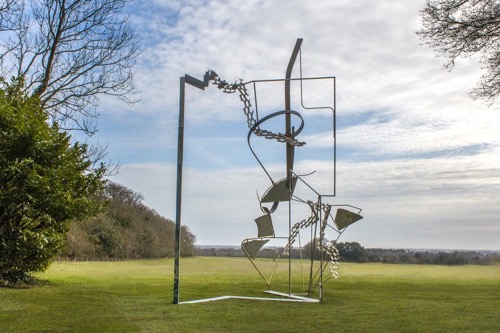
I find this artists combination of materials the most interestin, using each to their full potential as the colours of the paint always compliment the light and the space in which the work is presented. Also the artist’s use of shape and how these large geometrical forms ply and interact with the surrounding environment.
Zoe Leonard
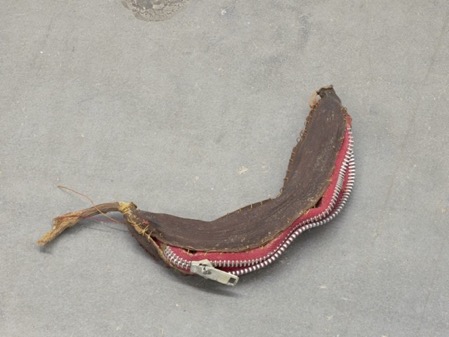
Zoe Leonard (born 1961) is an American artist who works primarily with photography and sculpture. The now New York based artist merges photography, sculpture, and installation. By employing strategies of repetition, shifting perspectives, and a multitude of printing processes, the artists practice probes the politics of representation and display as well as exploring themes such as gender and sexuality, loss and mourning, migration, displacement, and the urban landscape. Her photography work invites the viewer to contemplate the role that the medium plays in contributing to history. Her work always encourages the viewer to reconsider the act of looking itself, presenting it as an ongoing process.
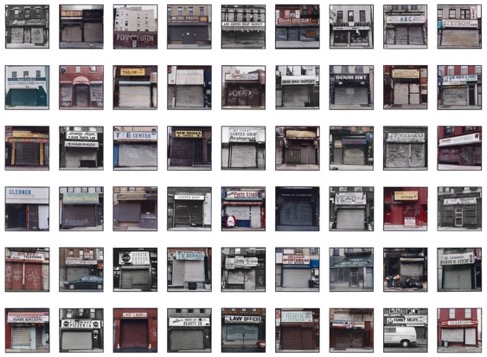
I like this artists work as she explores interesting diverse themes such as societal roles, gentrification, injustice and daily life. This makes us the viewer reflect our own environments and behaviours. Her sculptural work always inhabits the space in an almost non-invasive way. It is almost presented neatly like a passing idea or question. This further engages the viewer to think of her work outside of a gallery context and within the real modern world.
Gordon Matta Clark
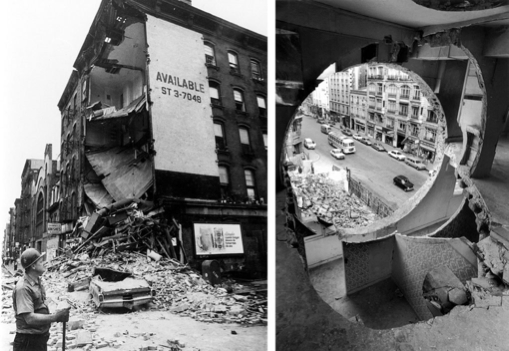
Gordon Matta-clark was born in 1943 in America and trained originally as an architect. He is best known for his spectacular ‘building cuts’ that are often seen as an outright rejection of the architectural profession. Dealing with themes of metamorphosis and resistance towards the commodification of art, he went on to study architecture at Cornell university from 1963 to 1968, where he met Robert Smithson who influenced his interest in using non-art materials. Moving back to New York, he experimented with both food and photography as well as documenting the burgeoning graffiti-scene and the sewers and subways of the city.
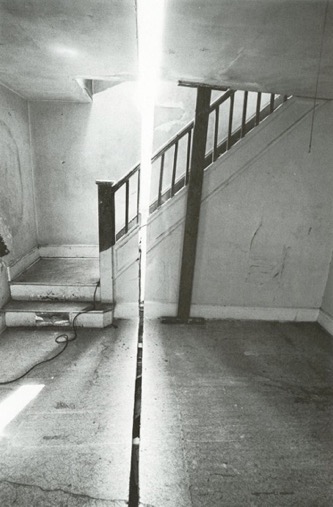
I find the artists use of medium the most interesting as well as his use of space. His ‘building cuts’ are site specific and his work was often illegal and destroyed directly after completion. This element of impermanence to his work is interesting also, the idea of creating something just to have the intention of destroying it. The impermanence i find playful and it makes his work somehow feel more special and outlandish.
3D Practice – Memory
For this project i wanted to focus on the theme of authenticity and reliability. Our memories overtime often become unreliable and our brain struggles to recall information. After researching this through articles and short documentary’s i found out the Brain takes in each bit of information individually before combining it all together to create one completed image. With this I started my media experiments by wanting to create small individual piece that I could combine in different ways using different methods of construction/deconstruction.
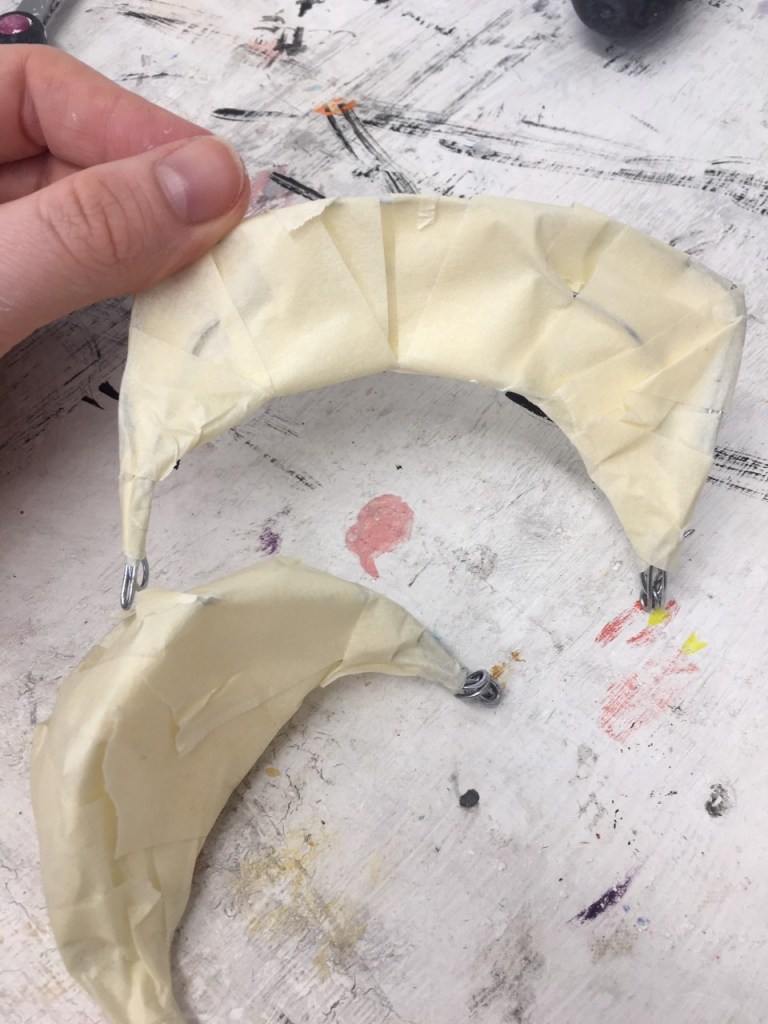
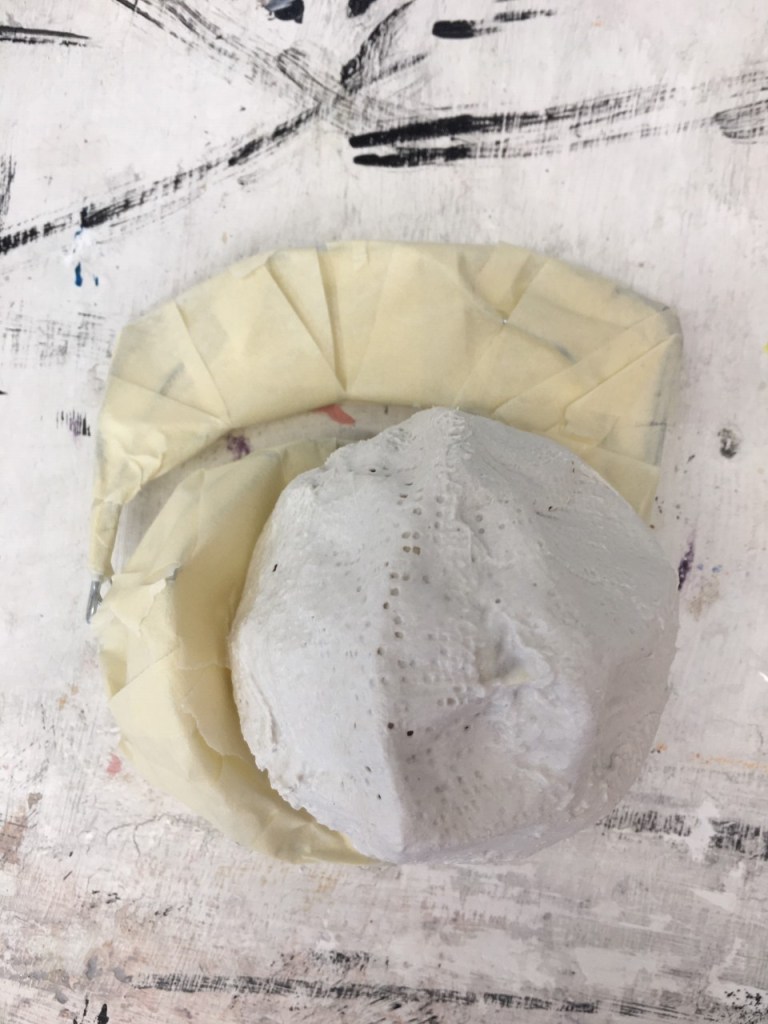
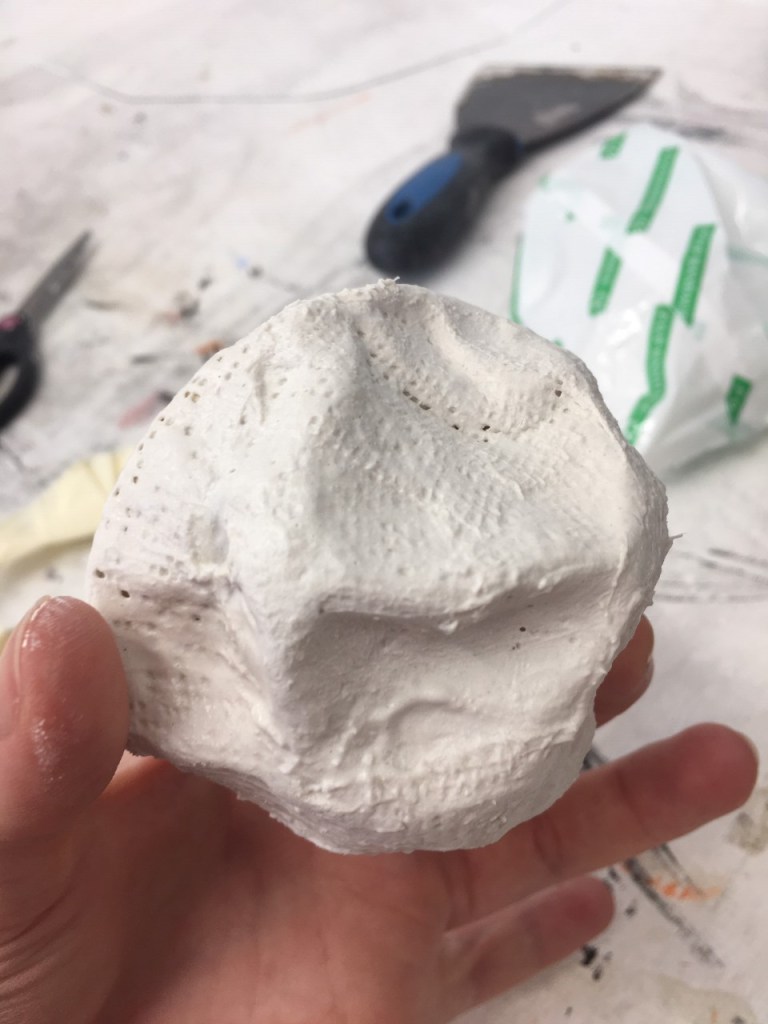
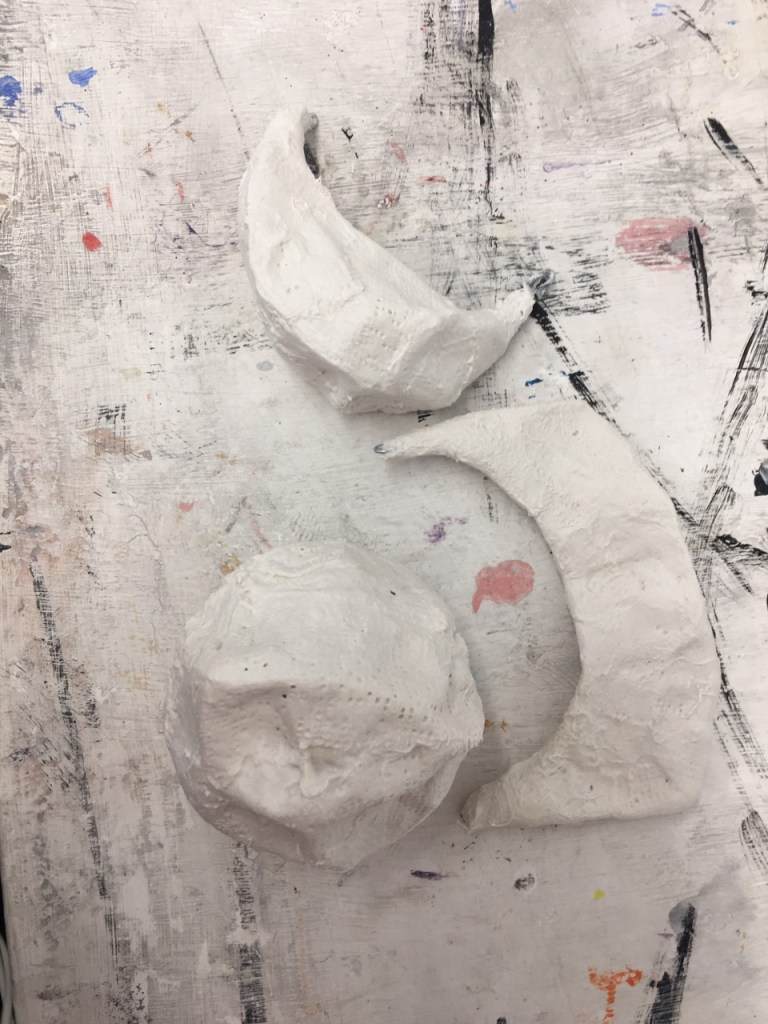
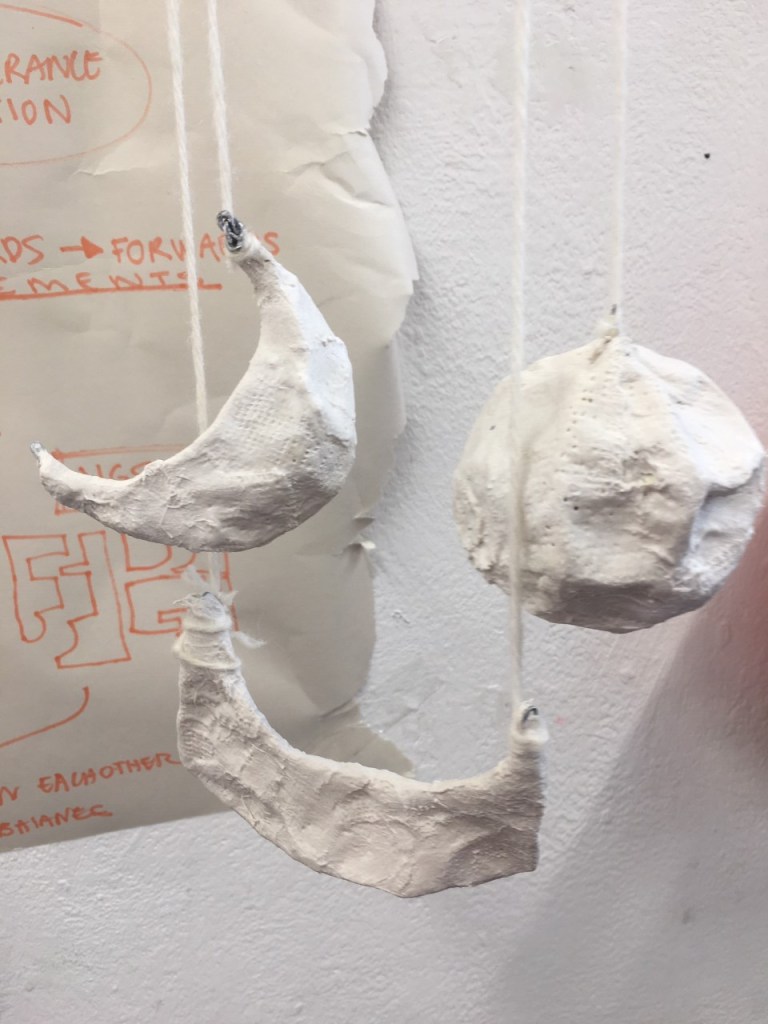
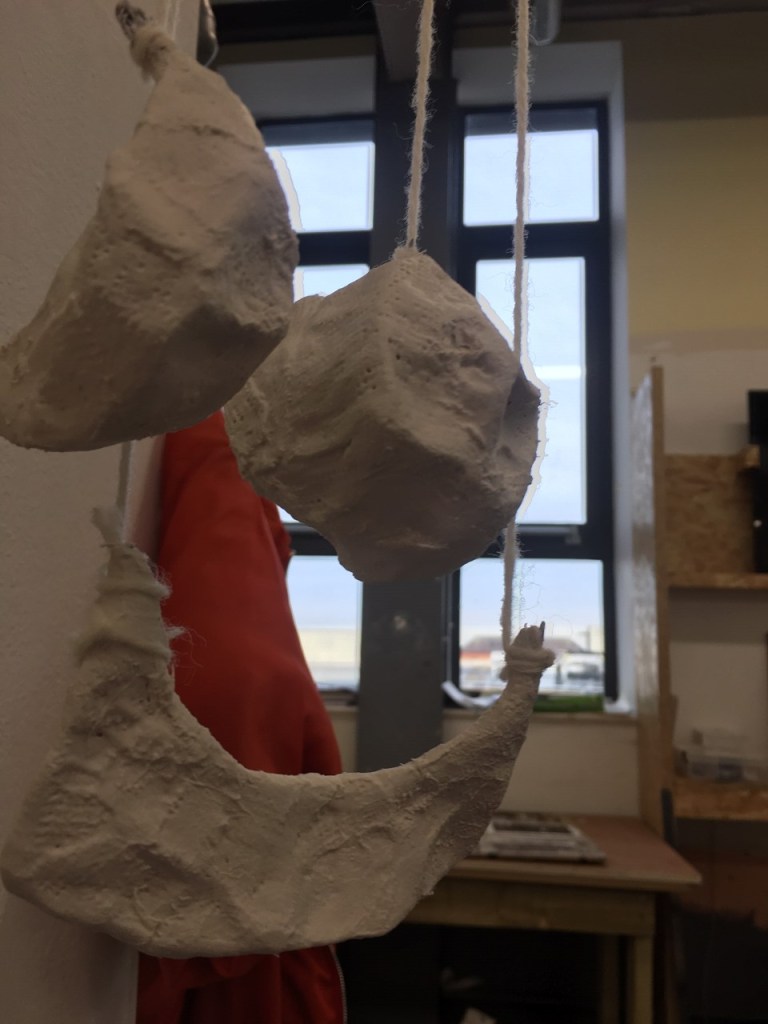
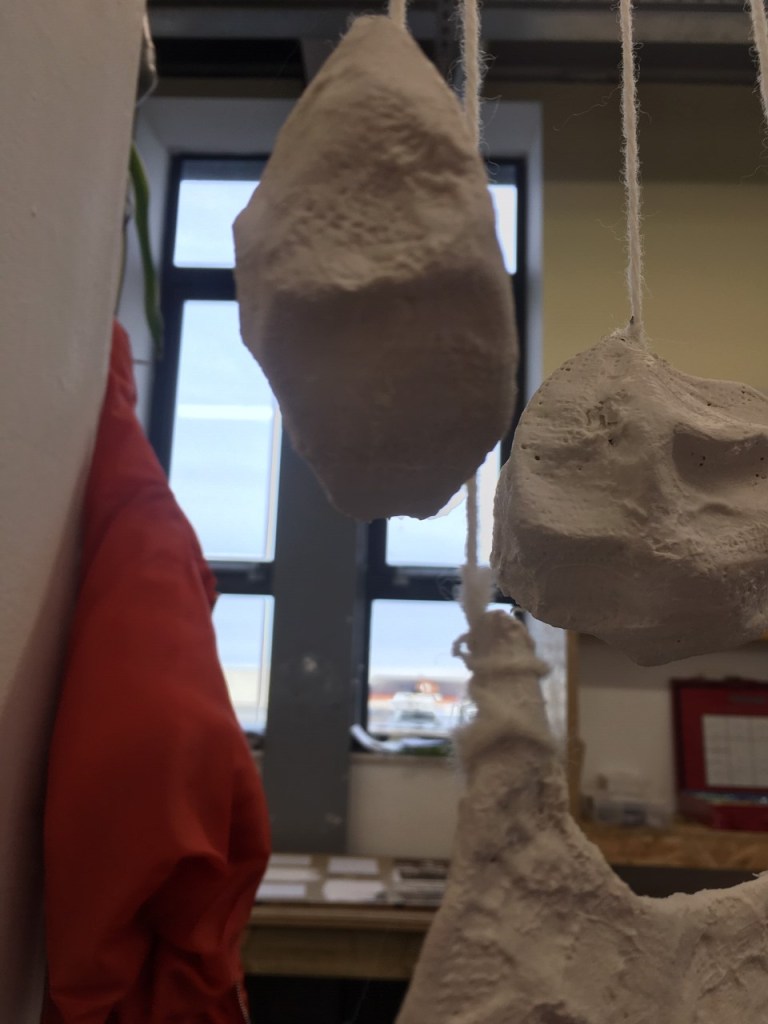
The first set of mod rock and wire pieces allowed me to arrange my ideas in different positions and experiment with balance and weight as well as how they would occupy a space together as well as separated. I also began to consider how I might consider the physical movement of these parts coming together/falling away from each other.


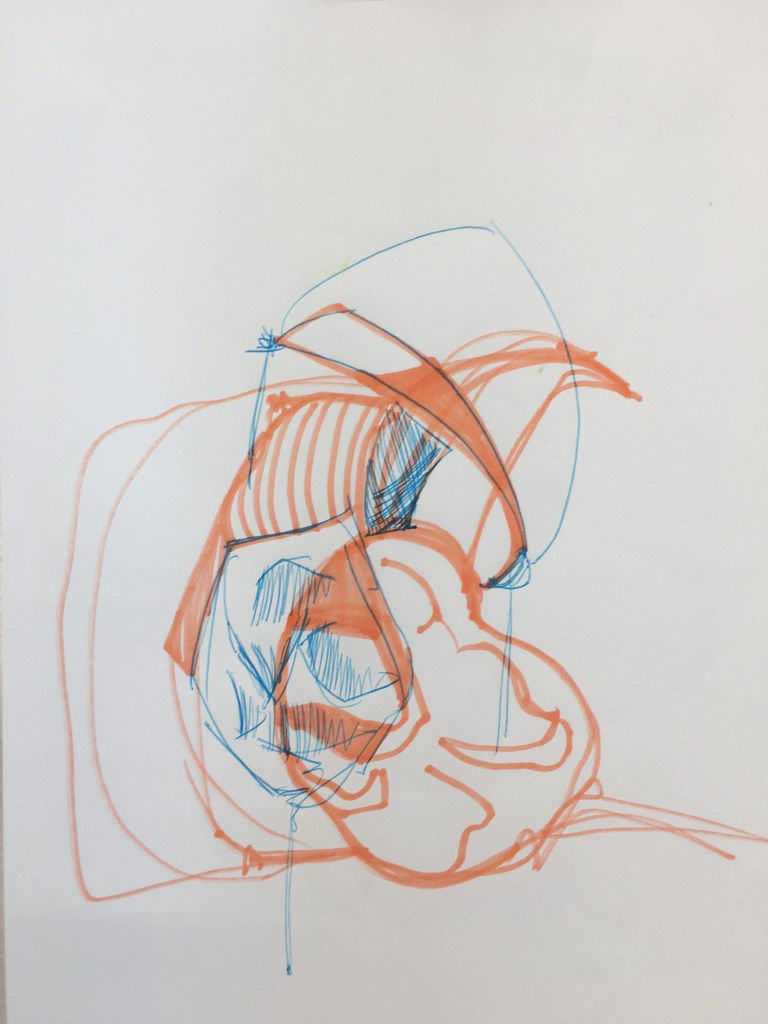


some working drawings done when combining small parts and how they were going to fit together
At this point in the project began to consider the 3 stages of how the brain processes information and how I could depict this –
THE ORIGINAL INFORMATION- PHYSICAL ACT OF BREAKING IT DOWN- PUTTING IT BACK TOGETHER TO CREATE A WHOLE IMAGE.


with both plaster and clay i started with a solid ball before separating it off into smaller chunks and the putting it back together as a whole. This method did become time consuming tho and i didn’t think it was visually that interesting. whoever i liked the physical act of my trying to put it back together and could have developed this further into a performance piece.

 CHARLEY MILLAR ART