Alan Davie

Born in 1920 Davie studied at Edinburgh college of art in the late 1930’s. His painting style is not purely abstract but manly focuses on childlike shapes and symbols. As well as painting he also produced screen-prints. In his working method he would often add so many layers of paint to the point where the original image had been covered over many times. He also stressed the importance of improvisation. The artist travelled widely and in Venice became influenced by Paul keel, Jackson pollock and Joan Miro. He explored themes of nature, tradition, family, wonder, illusion and dreams while most of his inspiration for his paintings came from his surroundings; weather that be a hillside or a piece of graffiti.
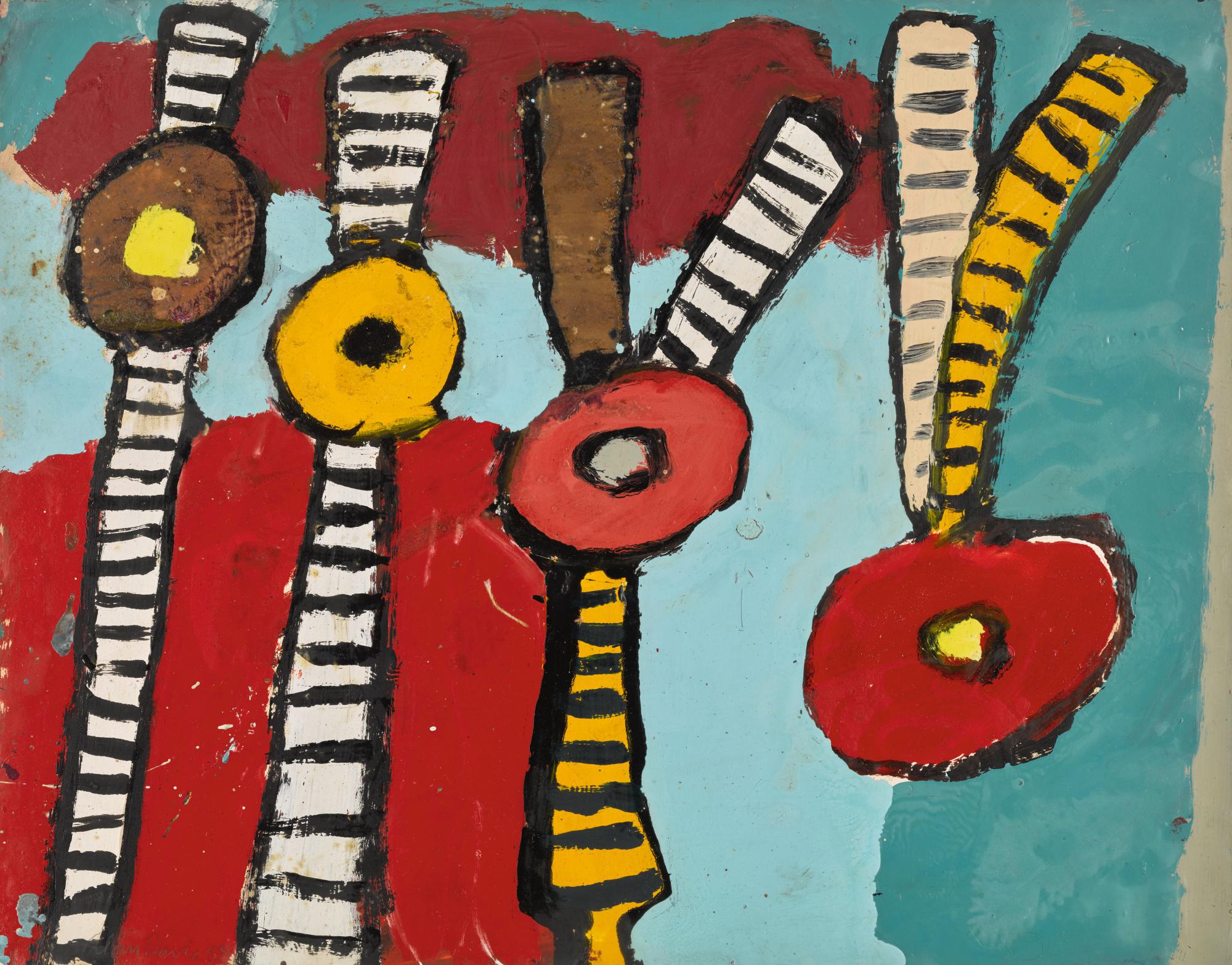
As well as these it is thought that Davie was heavily influenced by Zen philosophies, his paintings consist of responsive and spontaneous primitive compositions painted with obsessive, conglomerate mark-making to form images that slip in between abstraction and representation. Davie’s roster of references and influences is extensive, and includes Jungian psychoanalysis, Pictish symbol stones, contemporary abstract painters, and his lifelong passion and aptitude for playing music. All these influences can be seen clearly in his work. I enjoy the artists use of pattern and texture the most how overwhelming and manic the pieces seem despite the basic shapes and colours.
Barbara Kruger

Born in 1945, Barbara Kruger is an American conceptual artist and collagist best known for her black and white images overlaid with block red and white text. She is also best known for her feministic critique on society and western ideals. Her work analyses mass consumerism. Stereotypes and media. Her work was manly influenced by graphic design and modern advertising, she explores themes of feminism, rebellion, consumerism, media, power, desire and class Her works examine stereotypes and the behaviours of consumerism with text layered over mass-media images. Rendered with black-and-white, red accented, Futura Bold Oblique font, her works offer up short phrases such as “Thinking of You,” and “I shop therefore I am”. Kruger uses language to broadcast her ideas in a range of ways, including prints, T-shirts, posters, photographs, electronic signs, and billboards. As she says “I’m fascinated with the difference between supposedly private and supposedly public and I try to engage the issue of what it means to live in a society that’s seemingly shock-proof, yet still is compelled to exercise secrecy,”.

The thing I find the most interesting about her work is the bold and unapologetic style of her work. Because of this you would think that the messages within her work would be obvious but the viewer still has to think deeper around the words themes and imagery the artist is presenting us with.
Richard Hamilton

Richard Hamilton was an English artist known for producing some of the earliest works of Pop Art. Though he used a wide variety of techniques during his career, his most recognizable works were done in collage. Born on February 24, 1922 in London, he worked as an apprentice at an electrical components firm when he began taking evening art classes at Saint Martin’s School of Art. Entering the Royal Academy at the age of 16, Hamilton was later expelled for not following the school’s regulations. “Just what is it that makes today’s homes so different, so appealing?”; this work become a seminal image in Pop Art history. During the mid-1960s, the artist became increasingly interested in the work of Marcel Duchamp, and reflected his interests by attempting to proliferate his own art in various forms of media. Over the following decades, Hamilton focused on producing prints as well as incorporating new technologies, such as computer software, into his practice.
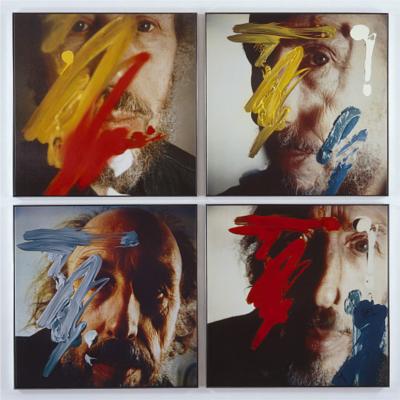
His works focus on themes of consumerism, media and advertising, using striking images to create layered images and meanings. He introduced the idea of the artist as being an active consumer of culture as well as a contributor. He immersed himself in pop culture movies, television, magazines and music. He wanted to bridge the gap between high art and consumer culture as he too was influenced mainly by surrounding pop artists and pop culture.
John Bellany

John Bellany was born at Port Seton in 1942 into a family of fishermen and boatbuilders. He moved to London in 1965 to study at the Royal College of Art, his paintings consistently centred around the complexities of the human condition and became anchored in the rich landscape of the of sea. Bellany’s work also explored Scottish symbolism and histories. “What he was doing in the mid-1960s in many ways changed the course of Scottish painting,” Keith Hartley, the senior curator of the Scottish National Gallery. Almost entirely figural, his paintings regularly feature themes of Christianity, Adventure and the female figure, drawing inspiration from Scottish primitive painters such as Alan Davie and Robin Philipson. In the 1970s, when his personal life was in turmoil, he embarked on a journey of self-destruction, which is reflected in the angst-ridden images in his paintings of the period. In the late 1980s, after overcoming serious health issues his work became more optimistic in spirit.
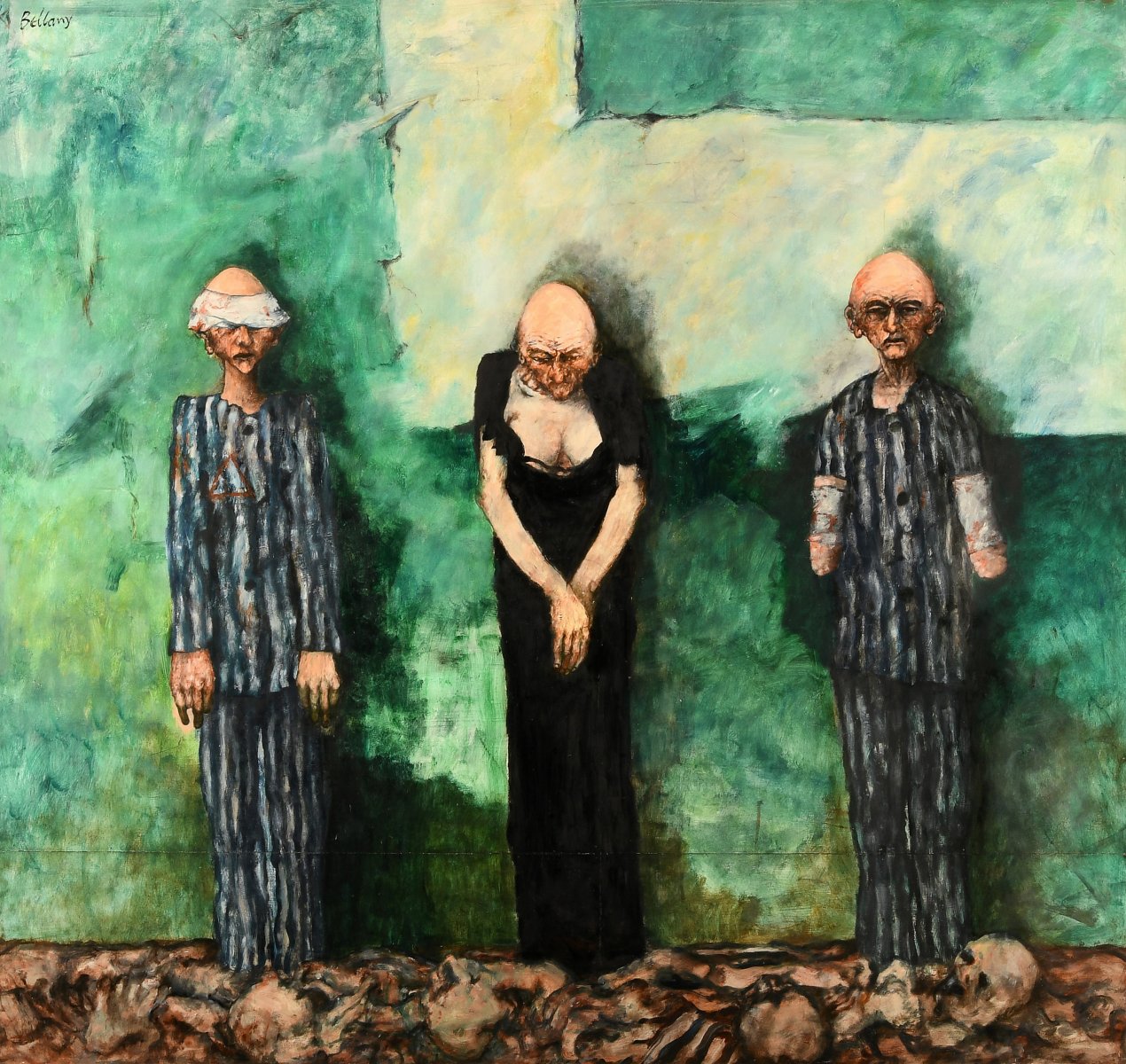
Despite the repeated setting the artists work always seems to depict I find the detailed menacing figures he creates the most interesting. His use of colour and ability to convey such emotion makes the viewer almost feel intrusive to these paintings as if interrupting them in some way.

 CHARLEY MILLAR ART