Cildo Meireles
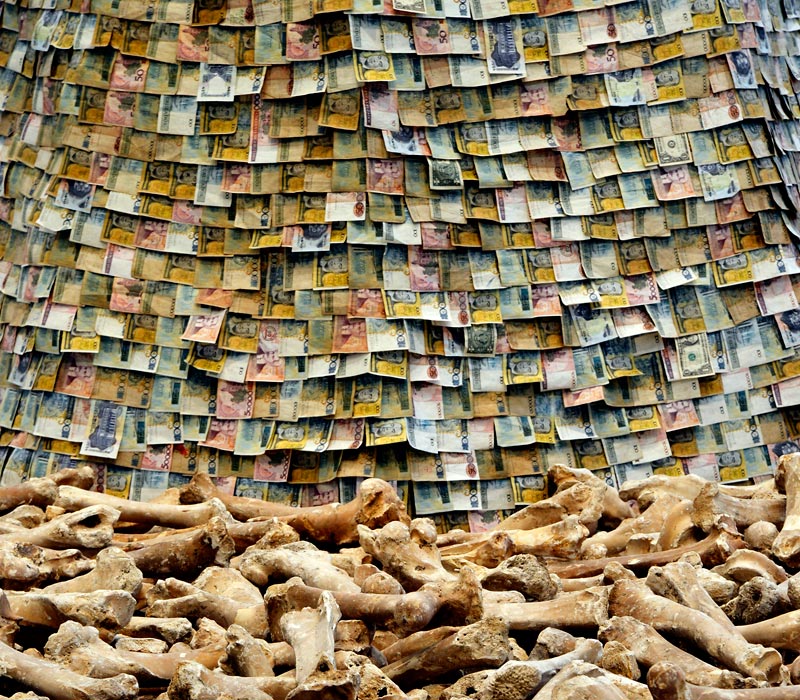
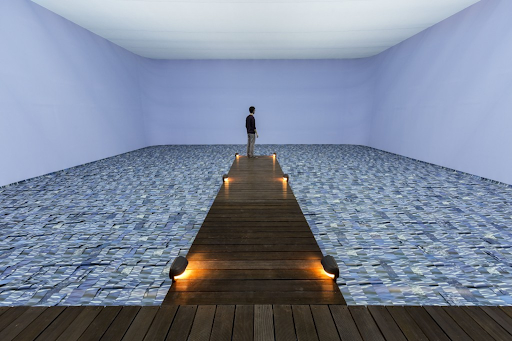
Cildo Meireles is a Brazilian conceptual artist, installation artist and sculptor. He is noted especially for his installations, many of which express resistance to political oppression in Brazil. Experimenting with different techniques and conceptual strategies, in his sculptures and installations he uses a whole range of objects and materials, which he chooses for their symbolic significance. He explores human perception in its entirety, addressing universal and sometimes dramatic themes such as dictatorship, colonialism, globalisation, and the repression of human rights.
“I am interested in this relationship between the work of art and the viewer. Of course art can exist without a viewer, but it wouldn’t be so useful.“
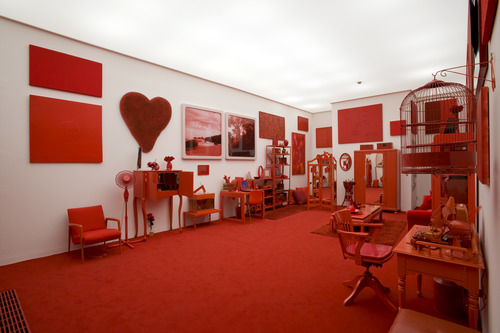
‘Red Shift‘ is a piece which spans three rooms. The first room, entitled Impregnation, could be someone’s living room, yet everything except the white walls, is red. This work specifically I found interesting for its both simplistic but overstimulating qualities. Meireles describes the initial concept for the work as imagining ‘a place in which someone, for some reason – whether due to preference, mania, imposition or circumstance – would accumulate in a given place the greatest possible number of objects in different shades of red.’ The artist expertly explores themes of space and our perception of time. I am most interested in how the artist used and explores a pace how he communicates complex issues with simple materials and clean imagery.
Sheila Hicks
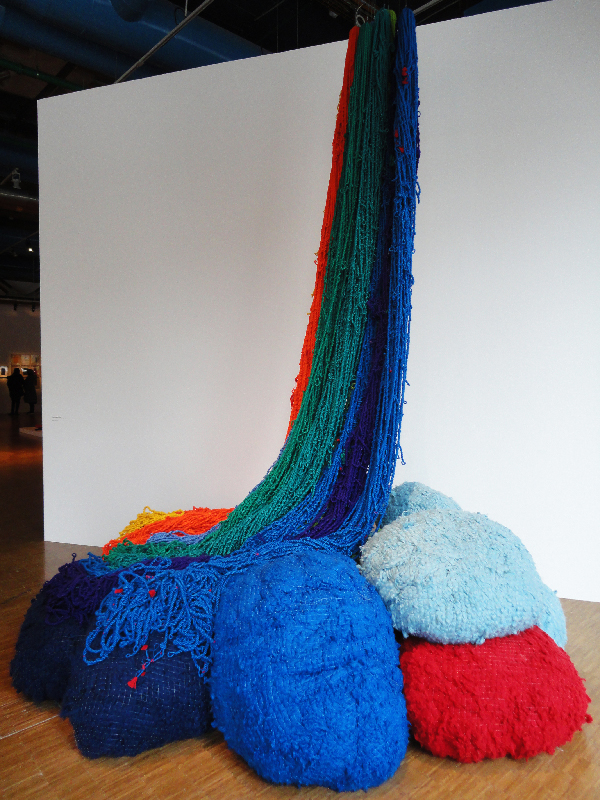
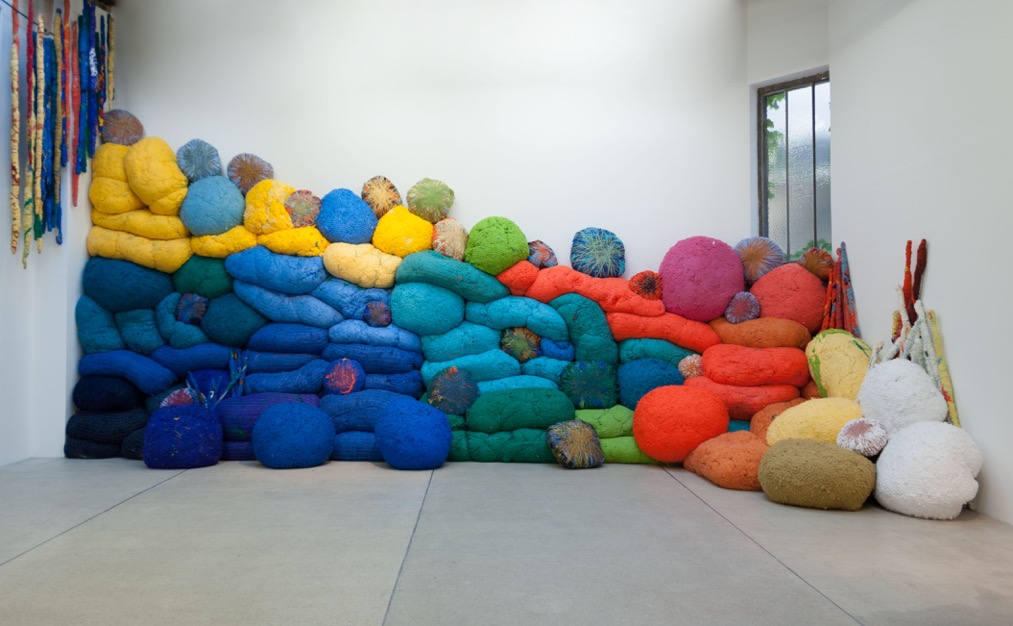
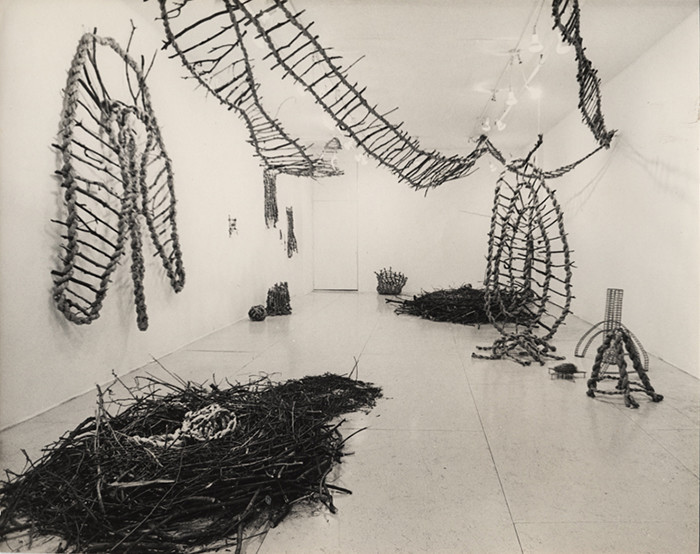
Sheila Hicks is a contemporary American artist known for her innovative use of weaving and sculptural installations. Ranging from small scale wall hangings to enormous site-specific works and installations. Hicks’s works blur the distinction between fine art and craft. Hicks colour pallet evokes this childish exciting and stimulating within any space it occupies. The texture of her materials further create a sense of childlike security and comfort – themes im discussing in my current work. She has traveled extensively throughout her career: setting up workshops in Mexico, Chile, and South Africa; developing commercially woven fabrics in India and tufted rugs in Morocco; and realizing large-scale commissions in the United States, Japan, and Saudi Arabia. In each place, she has mined local knowledge to inform work that transcends geographic boundaries.
“Textile had been relegated to a secondary role in our society, to a material that was considered either functional or decorative,” she explained. “I wanted to give it another status and show what an artist can do with these incredible materials.”“Textile is a universal language. In all of the cultures of the world, textile is a crucial and essential component,”
Her use of materials is something i am going to consider and experiment with going forward. I love how she fills a space with playfull forms and creates these interesting shapes with objects and colour. Hicks uses intensely saturated colour and the raw materials of textiles—wool, synthetic thread, linen flax—in works that are rigorously constructed by wrapping, piling, and weaving her materials.
Kazuko Miyamoto
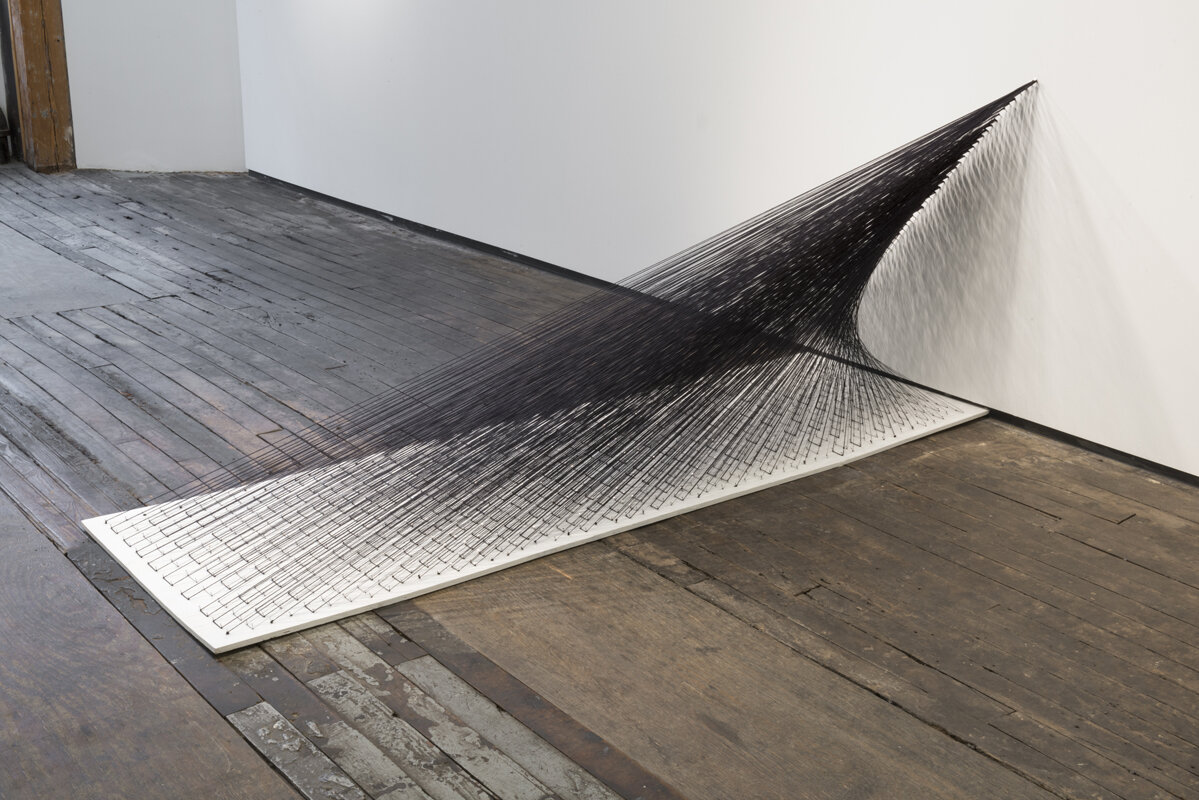
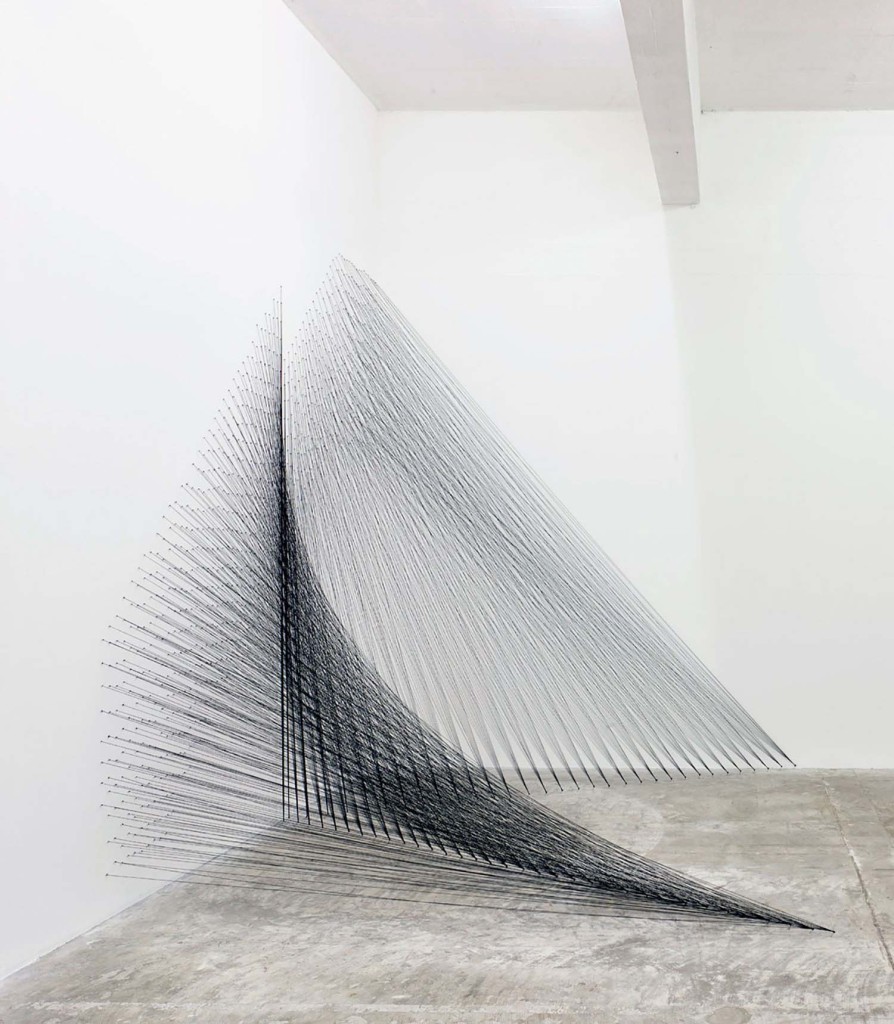
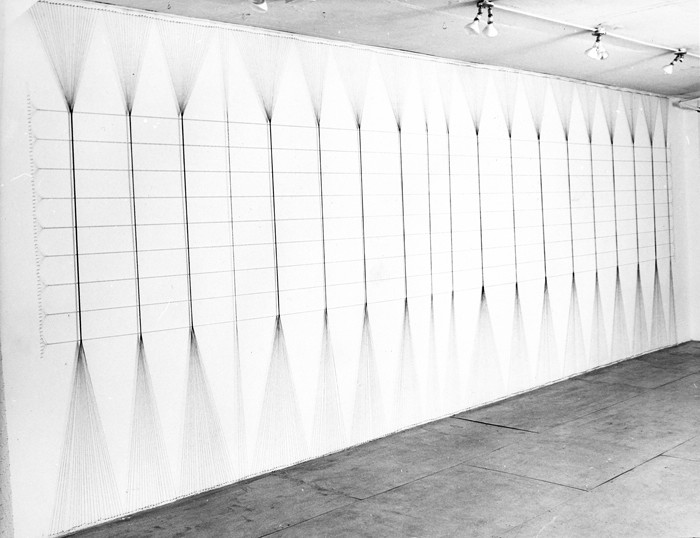
KAZUKO MIYAMOTO was born in Tokyo in 1942 where she studied art at the Gendai Bijutsu Kenkyujo (Contemporary Art Research Studio). She moved to New York in 1964 and attended The Arts Student League of New York. Her work further explores our perception of space, weight and materials. Her work is characterised by her use of industrial strength cotton thread. The strands of thread are stretched taut often between multiple points at parallel, horizontal, and oblique angles. Once assembled, the strands form lines that alternately overlap or run parallel to one another. She creates an optical shimmer where the shape and texture changes dependant on where it is perceived in the room it occupies. Her work surrounds and almost embraces the viewer. Resembles a nest or cocoon, inviting associations with security and shelter. The contrasting elements are the things i find most interesting; the regularity and irregularity, hardness and softness, and lightness/ heaviness.
Nike Savvas
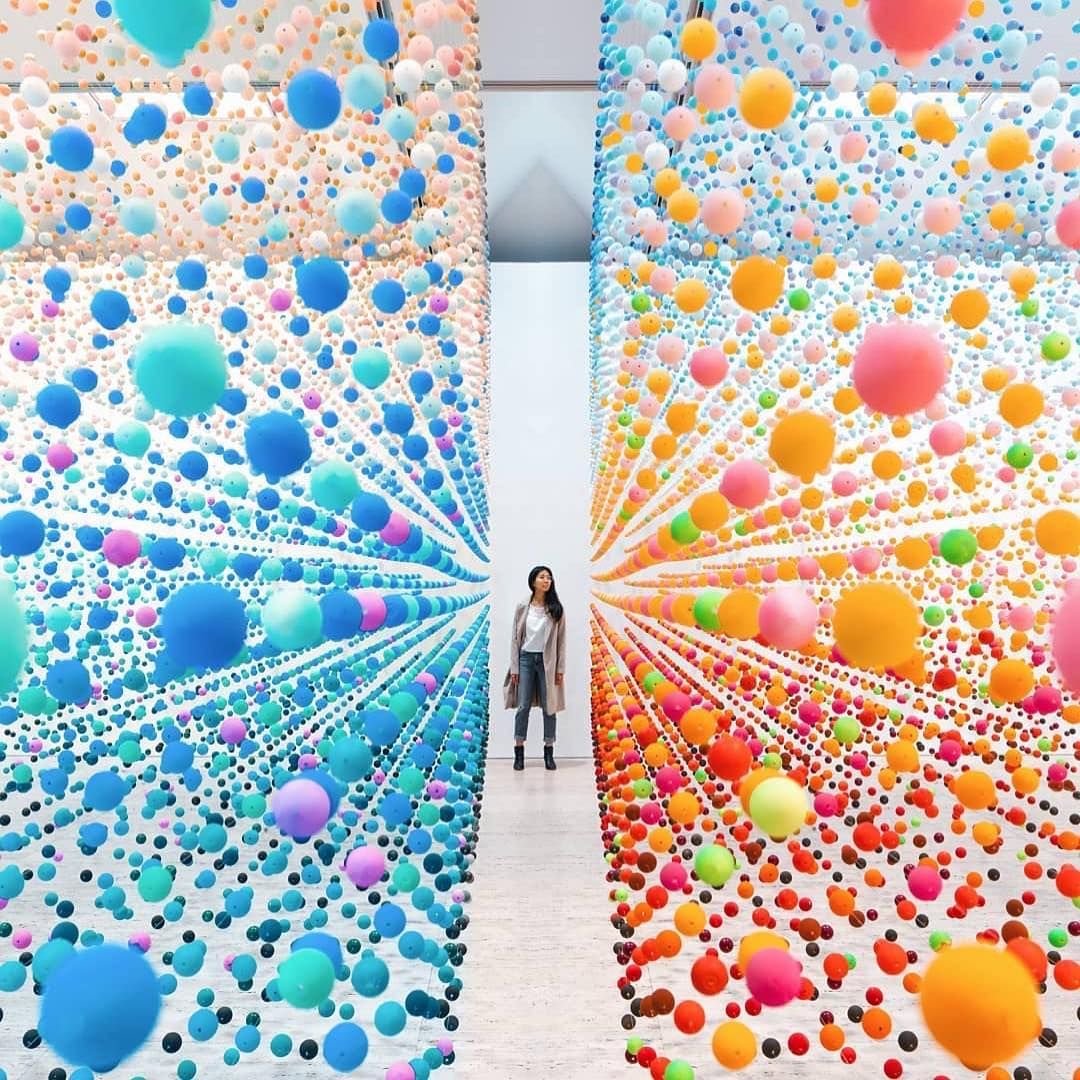
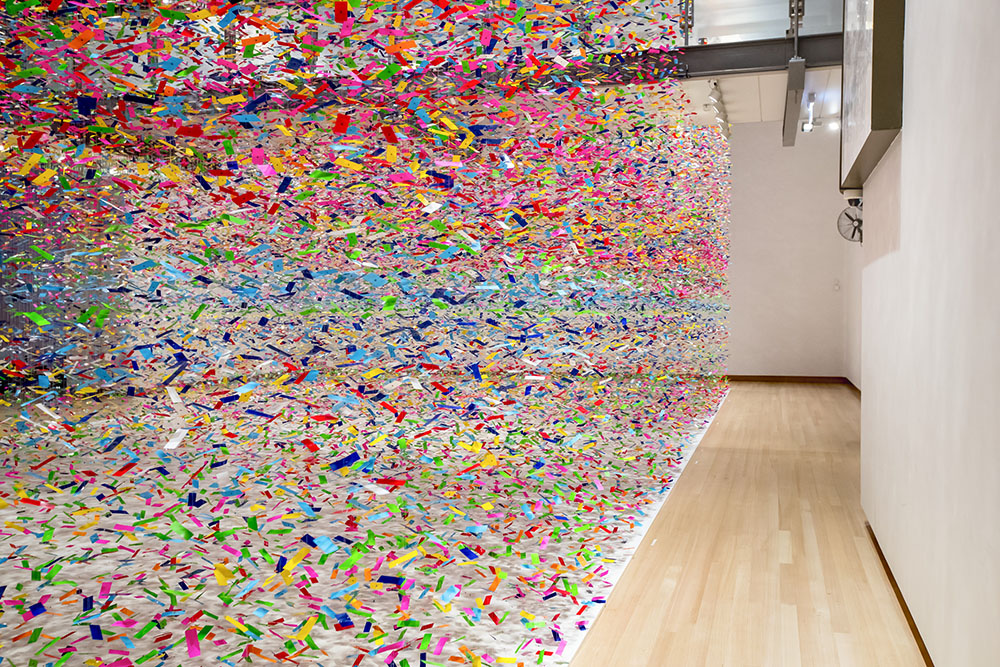
Nike Savvas is a senior Australian Artist based between Sydney and London. Trained as a painter, she works across scale and materials completing numerous large-scale installations
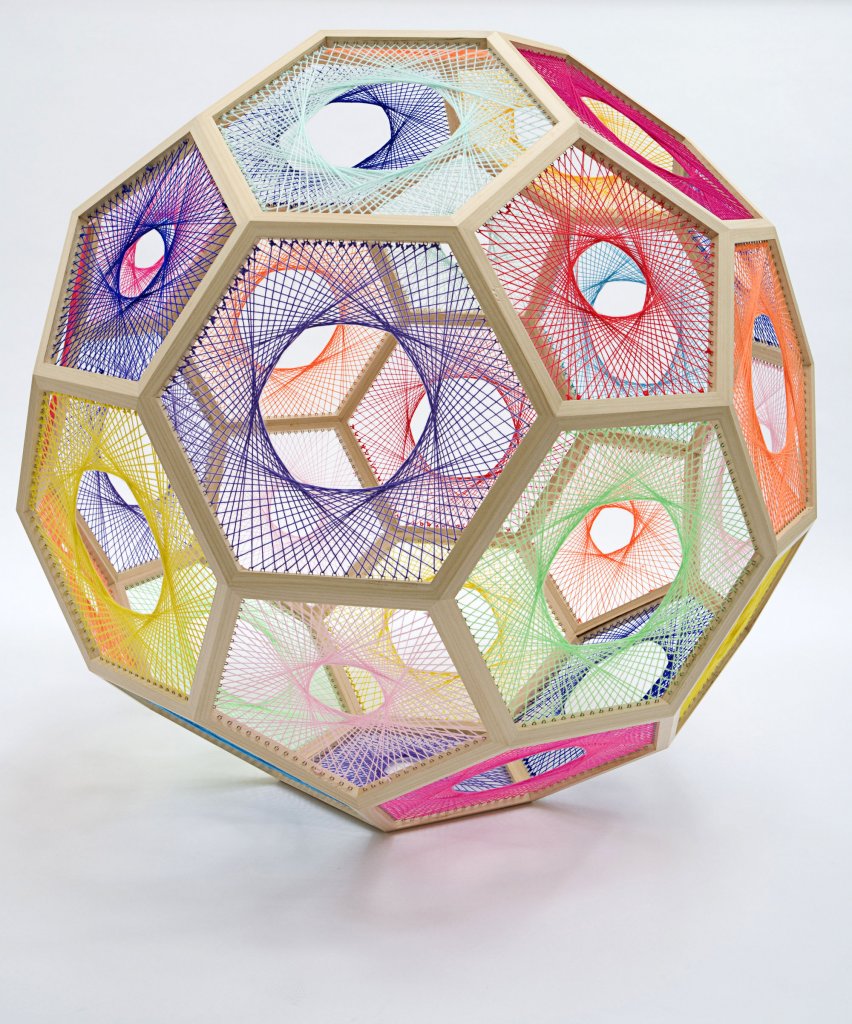
Drawing her inspiration from Op Art through to kitsch, her work often reflects patterns and complex mathematical algorithms – drawing attention to both the tangible and the abstract at once. Her objects and installations often invite the viewer to partake in the active experience of her work refocusing and moving around the space in order to understand the work. Her art is never still, rather Savvas creates fluctuating, moving objects that captivate and mesmerise the viewer and space.
Her materials span across installation, sculpture, kinetic and light-based media that challenges perceptions and demanding an active participation from her viewers. To me she draws a lot of similarities to Bridget Rileys work making math and formula into physical space. Music is often transposed into colours, and her palette often derives from the Australian landscape.





 CHARLEY MILLAR ART